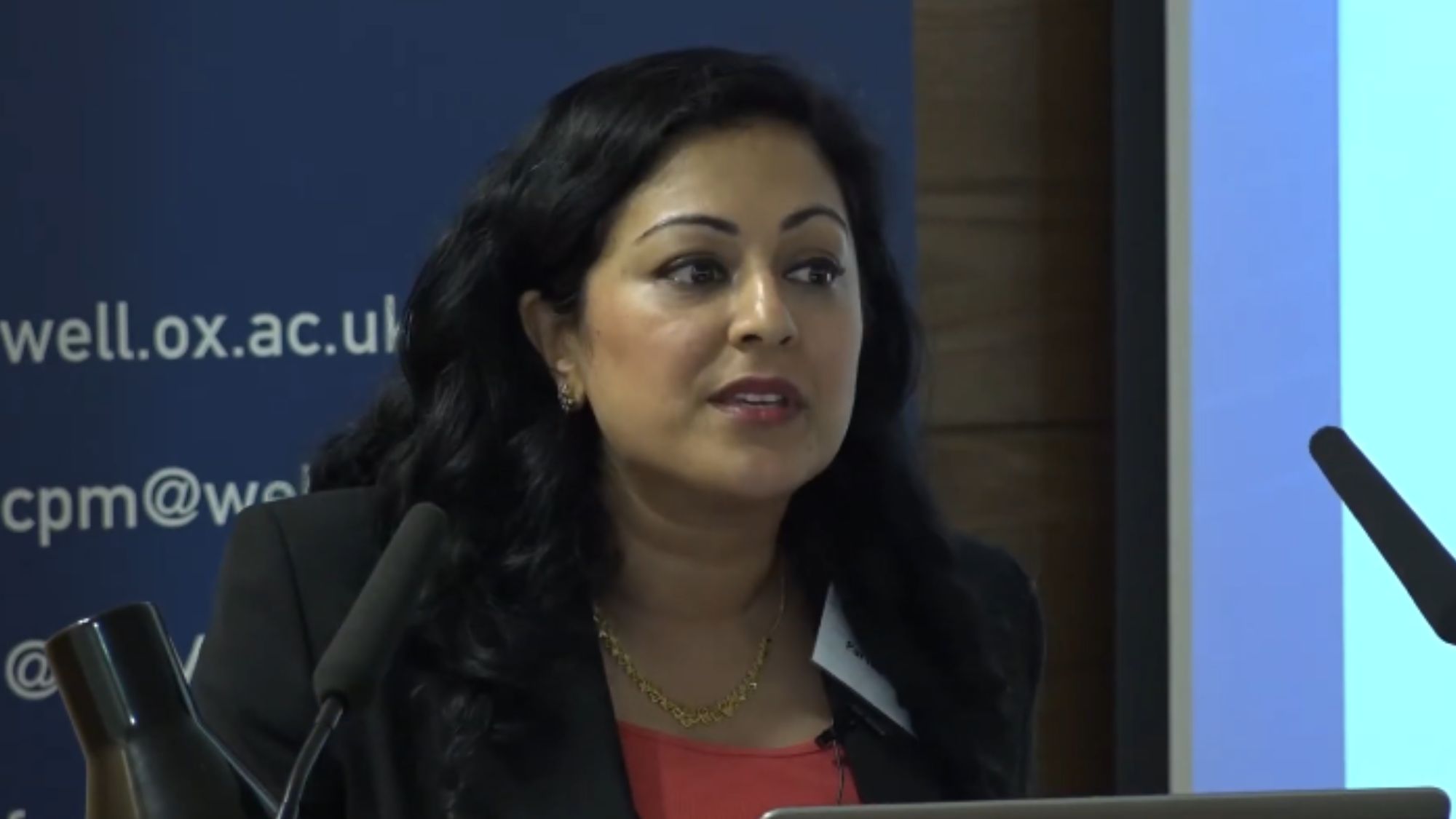
ANN ARBOR, Mich. (Diya TV) — Shobita Parthasarathy, an Indian-American policy expert and professor at the University of Michigan, has been appointed to a standing committee of the National Academies of Sciences, Engineering, and Medicine (NASEM). The committee focuses on advancing science communication in the United States.
Formed in 2016, the committee works to promote ethical and evidence-based science communication. It brings together leaders in science, policy, and communication to support research, improve collaboration, and build institutional capacity. Its goal is to help experts share science more clearly and effectively with the public.
Parthasarathy was selected for her deep experience in science policy, ethics, and equity. Her work bridges the gap between new technologies and public interest, often focusing on fairness and justice in innovation.
Parthasarathy serves as a professor at the Gerald R. Ford School of Public Policy at the University of Michigan. She also directs the school’s Science, Technology, and Public Policy Program. Her research explores how science and technology are governed and how experts shape public policy through data and analysis.
She is widely recognized for her work on artificial intelligence, biotechnology, and inclusive innovation policy. Her studies highlight how technology affects different communities and how policies can create fairer outcomes.
“I am particularly excited to provide expertise on how scientists and engineers can develop more equitable and inclusive relationships with the communities they aim to serve,” Parthasarathy said in a statement. “And the kinds of structures and policies that academia and government can adopt to foster more trustworthy science and technology.”
Parthasarathy has led major research projects funded by the National Science Foundation, the Ford Foundation, and the Wellcome Trust. She is a former fellow at the Max Planck Institute and the Wilson Center. In these roles, she has focused on equity in innovation systems and how governments can better regulate emerging technologies.
She also directs the Technology Assessment Project, which examines the impacts of tools like facial recognition systems and large language models. Her goal is to provide a more complete view of how these technologies affect society, particularly marginalized groups.
In addition to her academic work, Parthasarathy co-hosts The Received Wisdom, a podcast that explores how science and technology shape society. Through the show, she discusses issues such as trust in science, ethical AI, and inclusive research practices.
The NASEM standing committee includes a diverse group of professionals. Members come from fields like public health, journalism, and data science. Experts from institutions such as the American Enterprise Institute, The COVID States Project, The Open Notebook, and Ciencia Puerto Rico also serve on the panel.
Academic members represent leading universities, including Duke University, Cornell University, Indiana University, Harvard Medical School, and Morehouse School of Medicine. Together, the committee works to improve science communication and help rebuild public trust in scientific research.
Parthasarathy’s addition to the committee highlights the growing need for equity-focused science policy. Her presence brings a strong voice to conversations about responsible innovation and ethical technology use.
As science becomes more connected to everyday life, the way experts share knowledge matters more than ever. Misinformation and mistrust pose serious risks to public health, environmental policy, and innovation. Committees like this one aim to make science more transparent, accessible, and inclusive.
Parthasarathy’s appointment reflects a national effort to bring fairness and justice into how science is communicated. With her leadership, the committee hopes to guide scientists, engineers, and policymakers toward a future where public trust in science can grow stronger.