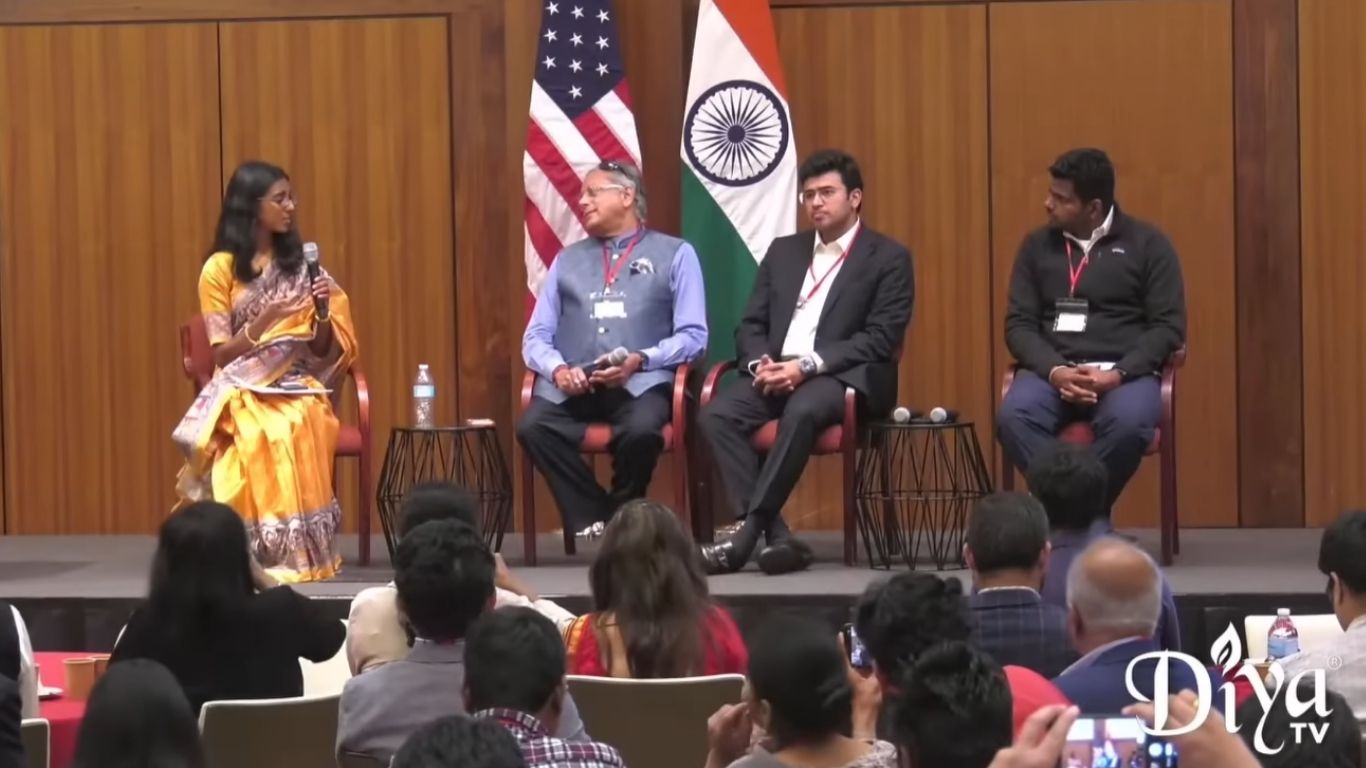
STANFORD, Calif (Diya TV) — Indian lawmakers from across the political spectrum called for stronger national unity, better urban governance, and sustainable economic policies during a wide-ranging panel discussion at Stanford University. The conversation brought together former UN executive and Indian National Congress leader Shashi Tharoor, BJP leader Tejasvi Surya and former Tamil Nadu BJP chief K. Annamalai. Stanford PhD student Samyuta Shivastra moderated the event that was proudly sponsored & broadcast by Diya TV.
The panel focused on three major themes shaping modern India: identity, governance, and economic growth. The leaders debated issues ranging from secularism and electoral reforms to urban infrastructure and welfare spending.
Tharoor said India’s strength comes from coexistence and mutual respect among communities. He pointed to Kerala’s long history of peaceful relations among Hindus, Muslims, Christians, and Jews.
He argued that India should move beyond “tolerance” and embrace “acceptance.” According to Tharoor, tolerance can appear patronizing, while acceptance creates equal respect among people with different beliefs.
Tharoor warned against policies or rhetoric that alienate minorities. He said even a small section of citizens feeling excluded could create serious challenges for national unity and governance.
Surya agreed that India must protect unity but framed the issue through constitutional equality. He criticized religion-based welfare measures and housing policies, arguing that such programs encourage segregation instead of integration. He said governments should treat citizens equally without granting special privileges based on religion. He also raised concerns about identity-based politics in several states.
Annamalai focused heavily on Tamil Nadu politics. He accused the Congress party of changing positions for political convenience while dealing with regional allies. At the same time, he stressed the importance of maintaining national unity without deepening religious or regional divides.
The panel also discussed the controversy surrounding electoral roll revisions and citizenship issues. Tharoor raised concerns about alleged voter deletions in West Bengal. He said millions of appeals linked to removed voter names remain unresolved, raising fears of disenfranchisement.
Surya defended the process, saying election authorities must ensure voter rolls remain accurate and free from manipulation.
Another major topic was delimitation, the process of redrawing parliamentary constituencies based on population changes. India froze delimitation based on the 1971 Census, creating growing representation gaps between northern and southern states.
Tharoor warned that a rushed delimitation exercise could upset India’s federal balance. He said southern states that successfully controlled population growth fear losing political influence in Parliament.
He called for a broad national consultation before any changes take effect. Tharoor also suggested studying systems used in countries such as the United States and members of the European Union to balance representation fairly.
Surya proposed expanding the Lok Sabha from 543 seats to around 850 seats. He argued that larger representation would create smaller constituencies and improve accountability without reducing any state’s influence. The leaders also briefly discussed the women’s reservation bill, which proposes reserving 33% of parliamentary seats for women.
Despite political differences, all three panelists agreed that India must improve urban governance to support economic growth.
Tharoor and Surya called for stronger municipal corporations and directly elected mayors with real authority over budgets and administration. They criticized systems where bureaucrats control cities with limited accountability to voters. Tharoor cited Bengaluru as an example, noting that the city has struggled without a fully empowered elected mayor for years.
Annamalai highlighted Tamil Nadu’s recurring flooding problems and weak municipal services. He blamed political interference and dynastic control for limiting the powers of local leaders. The panelists also supported stronger public transportation systems to reduce traffic congestion and pollution in Indian cities.
They praised recent Finance Commission recommendations that increase funding for cities with populations above one million. The lawmakers said these reforms could improve infrastructure and attract investment. The discussion also examined India’s growing culture of election freebies and welfare promises.
Annamalai warned that Tamil Nadu’s rising debt burden threatens long-term economic stability. He said excessive spending on subsidies and loan waivers discourages investment and weakens fiscal health.
Tharoor acknowledged similar financial pressures in Kerala. He said many states struggle to balance welfare programs with sustainable budgets because millions of Indians still live near the poverty line.
Surya said most political parties now make similar promises during elections, regardless of ideology. He pointed to new Finance Commission policies offering long-term, interest-free loans tied to infrastructure creation as a possible solution.
The discussion ended with a message aimed at students and the Indian diaspora. The panelists encouraged young Indians abroad to stay connected with the country and help shape its future through ideas, innovation, and public service.