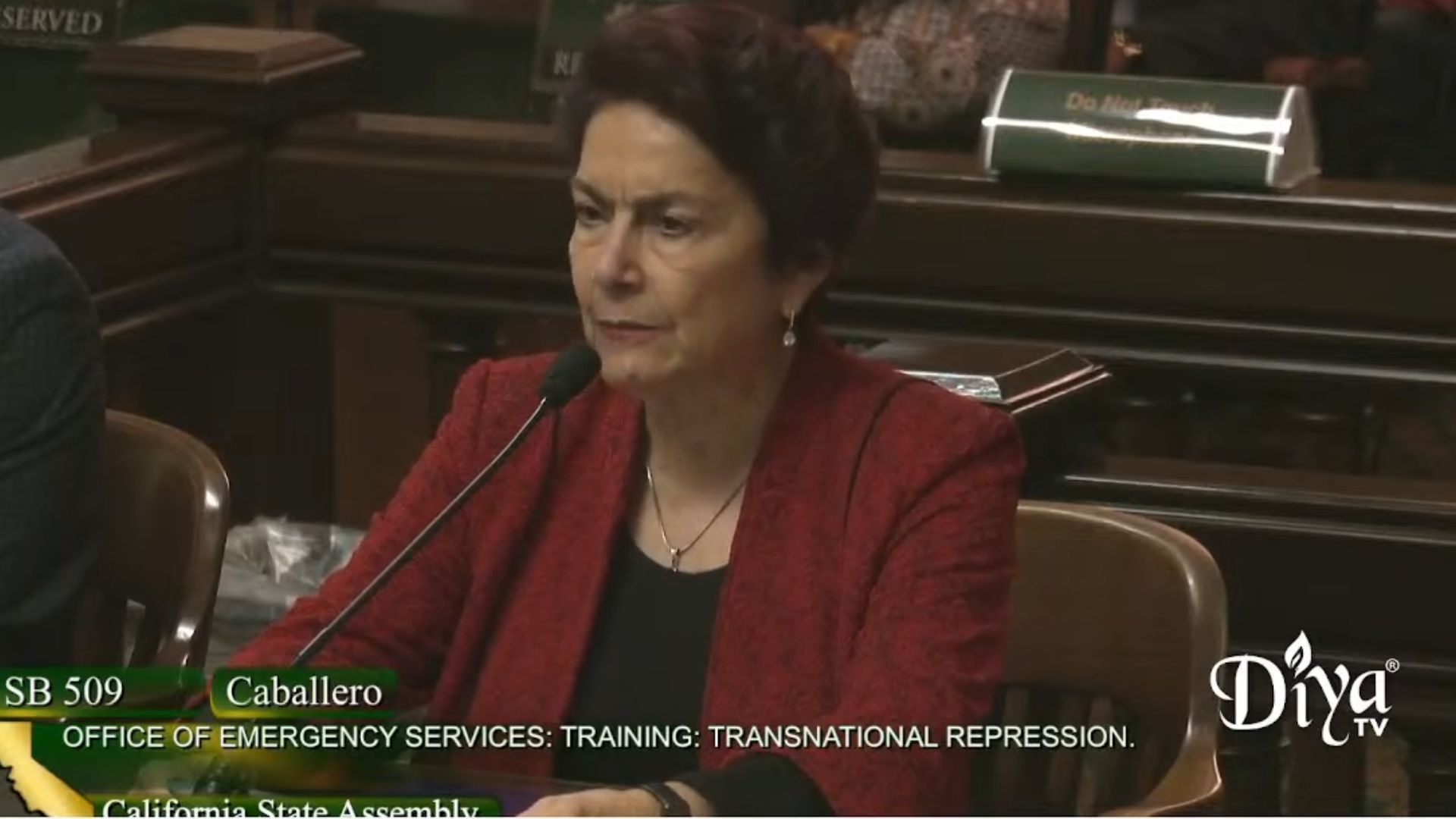
SACRAMENTO, Calif. (Diya TV) — A new bill advancing in the California Legislature seeks to strengthen protections for immigrant communities facing threats tied to foreign political tensions. Spearheaded by State Sen. Anna Caballero, the legislation aims to equip local law enforcement with the cultural and political understanding needed to respond to transnational intimidation and threats targeting diaspora communities.
Caballero said the bill originated from conversations with members of the Sikh and Hindu community, as well as other immigrant groups who fled violence in their home countries only to find similar threats resurfacing in the United States, particularly through social media. “They want to feel safe while they’re here, but they also want someone to be looking out for them,” she said during a public hearing.
A central concern, Caballero explained, is that local police departments often lack the training to understand the context behind political or sectarian tensions affecting immigrant communities. As a result, when individuals report harassment or threats, they are sometimes met with confusion or inaction. “The police have no clue what’s going on,” she said, emphasizing the need for cultural competency training that enables officers to identify and respond to threats rooted in international conflict.
While the bill has garnered support from several organizations representing South Asian and other immigrant groups, it has also faced notable opposition. Caballero attributed some of the friction to the wording of the bill, which has gone through several revisions in an effort to balance the concerns of differing communities. “These are different groups of people that may have spent generations hating each other, and they come to this country, and that needs to disappear,” she said.
The legislation strives to ensure that no single group is favored over another, instead focusing on equipping law enforcement to act as neutral peacekeepers. “We want to give the police the ability to understand what [immigrants] came from, to be able to intervene—and not be peacemakers that give one group an advantage over another,” Caballero said.
Caballero acknowledged that laws already exist to handle intimidation and hate crimes but said the gap lies in awareness and response. “Ultimately, what we want is for the police department to understand and take seriously the complaints of individuals that feel like they’re being harassed or threatened,” she said. If local officers fail to take a report seriously or pass it along to federal agencies like the FBI, she added, “then you feel like you’re not safe.”
Although the bill has stirred debate, Caballero remains optimistic. “We’re trying to wordsmith it very carefully,” she said, noting that even members of the legislative committee have stepped in to help refine the language. “If it’s just a question of one word, we’re very close.”
As California continues to serve as home to one of the most diverse populations in the country, lawmakers like Caballero believe the state must lead on issues where national policies may lag. “California has a large group of immigrants… and this has become a priority because of the heightened attack on immigrants,” she said. “That community doesn’t feel like anybody’s paying attention.”
The bill remains under review but appears to be moving forward as legislators work to finalize language that satisfies both legal and community concerns.