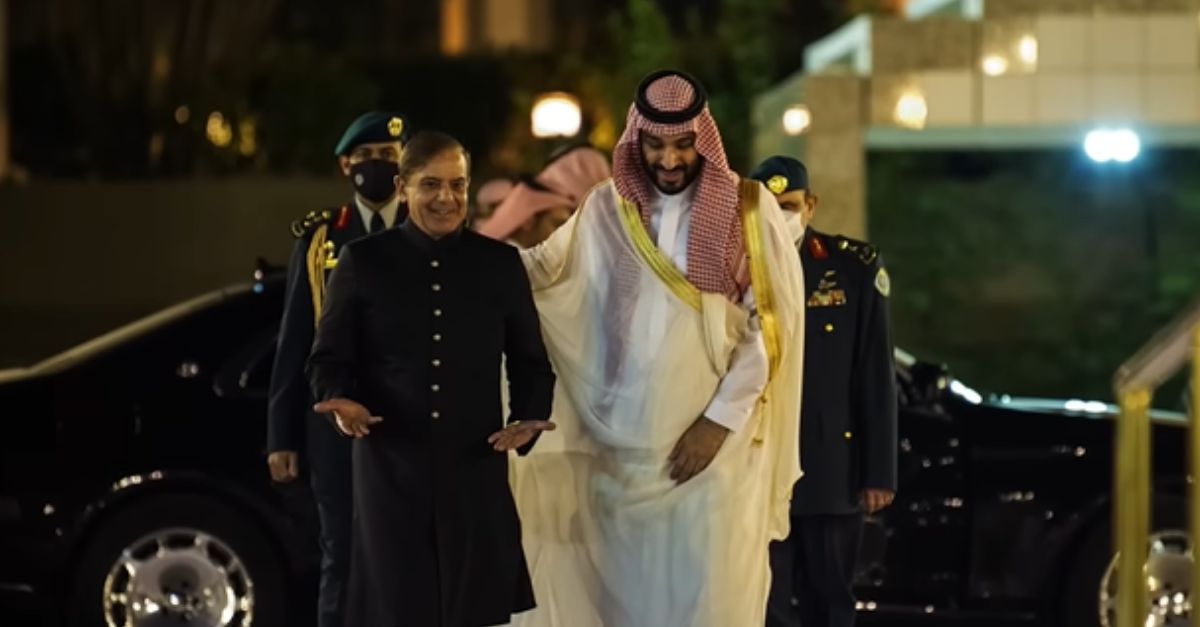
NEW DELHI (Diya TV) — Saudi Arabia and Pakistan announced a Strategic Mutual Defense Agreement on September 17, surprising the global community. The pact makes it clear: any aggression against one country is considered an aggression against both.
Experts say the agreement is similar to NATO’s Article 5, which requires members to defend one another if attacked. This has sparked speculation about a potential military alliance for Islamic nations.
Saudi Arabia and Pakistan have a long-standing relationship. Riyadh has supported Islamabad with loans, subsidized oil, and economic aid over the years. Pakistan, in return, has deployed troops to Saudi Arabia and offered military training. The countries also share a religious connection, with Saudi Arabia as the custodian of Islamic holy sites and Pakistan positioning itself as the “fortress of Islam.”
The new pact formalizes these ties, making implicit support official. For Pakistan, it is a symbolic victory that boosts national pride. For Saudi Arabia, it is a strategic hedge in an unpredictable Gulf region.
The agreement has drawn attention from other countries. Egypt, for example, is concerned that the pact undermines its own plans for a unified Arab military, often called an “Arab NATO.” Analysts note that Saudi Arabia’s choice of Pakistan over Egypt shows a preference for a simpler, more dependable partner.
India has reacted cautiously. The Ministry of External Affairs said it would carefully study the implications. Retired diplomats, however, have called the pact a “grave misstep,” warning that it could encourage Pakistan to take bolder actions against India.
The agreement could affect more than just India. Israel may worry that Saudi Arabia’s alignment with Pakistan complicates peace efforts. Iran sees the pact as reinforcing Sunni solidarity against its influence. Major powers like the U.S. and China also have stakes. The United States may feel sidelined as Saudi Arabia asserts more independence. China could benefit by strengthening its ties with both Pakistan and Saudi Arabia, boosting its influence in the region.
Many details of the pact remain unclear. The term “aggression” could mean different things, from cyberattacks to terrorism or conventional military strikes. This ambiguity allows flexibility but also increases the risk of misunderstanding and conflict.
The agreement comes after Israel attacked Qatar on September 9, killing several Hamas members and a Qatari official. The attack alarmed Middle Eastern nations and highlighted the need for stronger regional security arrangements.
Pakistan’s Deputy Prime Minister Ishaq Dar said many countries have shown interest in joining the defense pact. Speaking on October 3, 2025, he suggested that if more nations joined, the pact could become a NATO-like alliance. He called it a potential “new NATO or Eastern NATO” for Islamic countries and expressed confidence that Pakistan could one day lead all 57 Islamic nations.
Dar emphasized that Pakistan is already a nuclear and missile power and must now focus on becoming an economic power through collective effort. He said the pact with Saudi Arabia had been planned for a long time and was not made hastily.
The pact was officially signed on September 18, stating that any attack on one country would be considered an attack on both. Dar noted that during the recent four-day conflict with India in May, such a strike would have triggered Saudi support under the agreement.