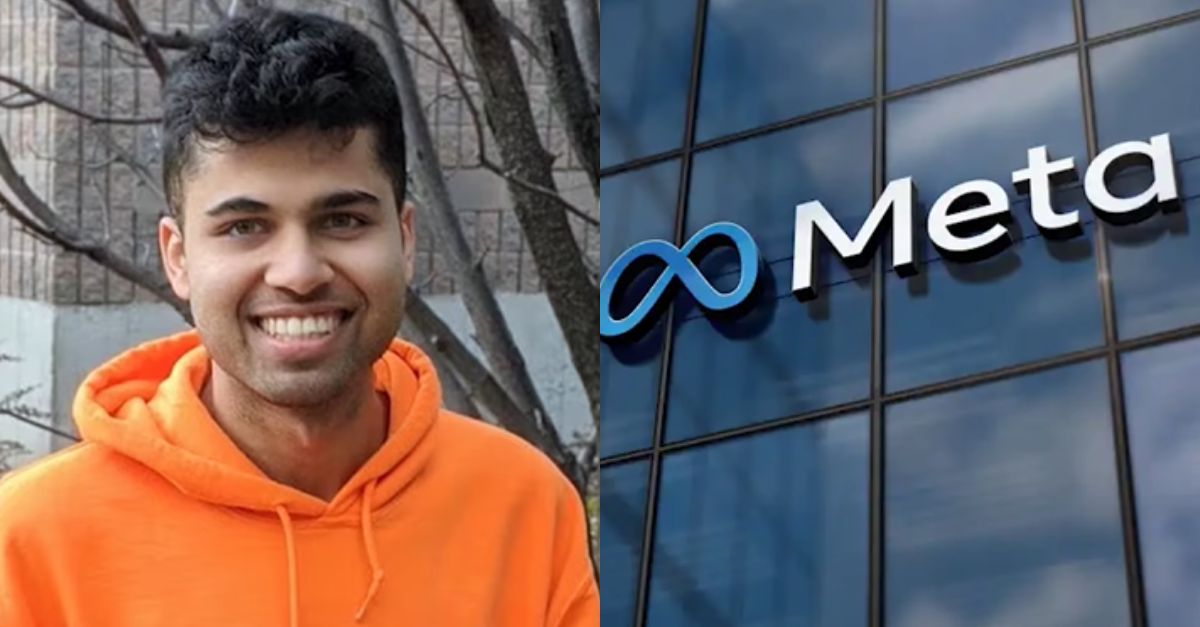
SAN FRANCISCO (Diya TV) — Indian-origin AI researcher Rishabh Agarwal has resigned from Meta just five months after joining the company’s newly formed Superintelligence Lab. His departure comes amid growing turbulence in the lab, which has seen multiple researchers leave in recent months.
Agarwal announced his decision in a post on X, formerly known as Twitter, stating, “This is my last week at @AIatMeta. It was a tough decision not to continue with the new Superintelligence TBD lab, especially given the talent and compute density. But after 7.5 years across Google Brain, DeepMind, and Meta, I felt the pull to take on a different kind of risk.”
He added that although the pitch from Meta CEO Mark Zuckerberg and Chief AI Scientist Alexandr Wang was “incredibly compelling,” he decided to follow Zuckerberg’s advice: “In a world that’s changing so fast, the biggest risk you can take is not taking any risk.”
During his brief tenure at Meta, Agarwal’s team worked on advancing post-training techniques for “thinking” models. They pushed an eight-billion-parameter dense model close to Deepseek-R1 performance. They also leveraged synthetic data to warm-start reinforcement learning and improved on-policy distillation methods.
Meta’s Superintelligence Lab has faced challenges since its creation. Reports indicate that at least three other researchers, including Avi Verma and Ethan Knight, have left the lab, with some returning to OpenAI. Agarwal’s exit underscores ongoing instability in the company’s AI division.
Agarwal joined Meta in April 2025 after leaving Google DeepMind. At DeepMind, he focused on reinforcement learning, self-improvement, and distillation techniques for large language models. His career has spanned several major tech firms, including Saavn, Tower Research Capital, and Latent Logic, which was later acquired by Waymo.
He earned a doctorate in artificial intelligence from the Mila–Quebec AI Institute. Before that, he completed his undergraduate studies at IIT Bombay. Agarwal also spent five years at Google Brain, where his work in deep reinforcement learning earned the NeurIPS 2021 Best Paper Award. Recently, he was appointed adjunct professor at McGill University.
Industry observers say Agarwal’s resignation highlights the competitive nature of AI research. Experts note that the rapid pace of AI development means top researchers frequently move between leading labs. Agarwal’s decision to leave Meta reflects a broader trend in the AI community where risk-taking is often necessary to drive innovation.
Meta has been heavily investing in AI, aiming to compete with other tech giants like OpenAI and Google. The Superintelligence Lab is central to this strategy, focusing on developing advanced AI models that can learn and improve themselves. Despite setbacks, the lab continues to attract talent from top AI institutions worldwide.
Agarwal’s departure may raise questions about Meta’s ability to retain high-profile researchers. Analysts say that creating a stable, innovative environment is crucial for the company’s AI ambitions. Meta’s leadership has emphasized the importance of risk-taking in AI, a philosophy that Agarwal cited in explaining his career move.
Rishabh Agarwal’s journey reflects the rapid evolution of artificial intelligence research. His contributions at Google Brain, DeepMind, and Meta have helped advance the field of reinforcement learning and large language models. His next career steps remain closely watched by the AI community.