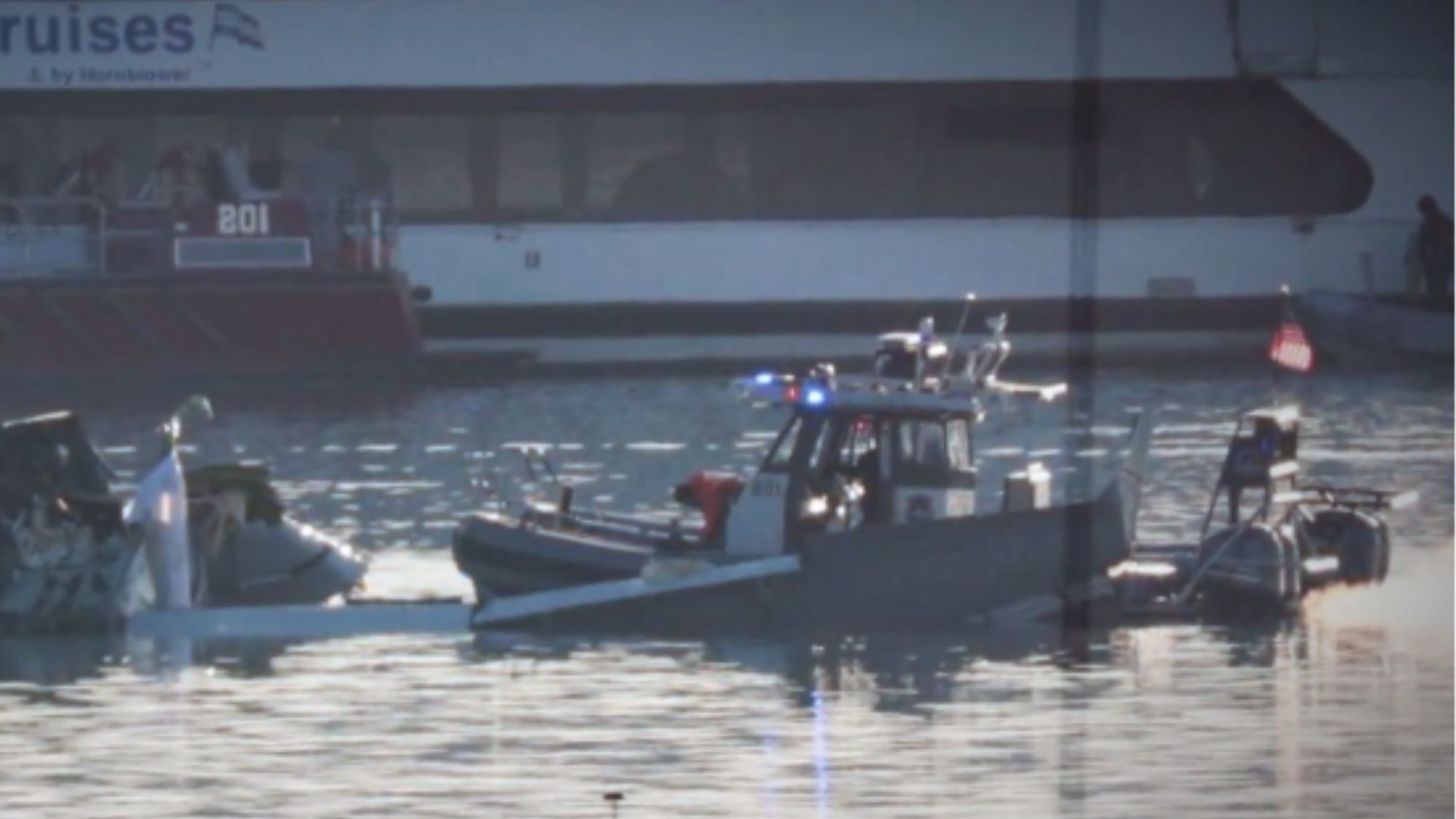
WASHINGTON (Diya TV) — The Army pilot of a Black Hawk helicopter that collided with a passenger jet over the Potomac River in January failed to heed urgent warnings from her co-pilot to change course, federal investigators have found. The fatal crash on Jan. 29 claimed the lives of all 64 people aboard American Airlines Flight 5342, along with the helicopter’s crew.
According to a New York Times investigation, the Black Hawk crew had requested to operate under “visual separation” rules — meaning they assumed responsibility for maintaining safe distance from other aircraft. A controller at Reagan National Airport approved the request, a standard but risky procedure in the congested D.C. airspace.
However, tragedy struck when the helicopter either missed or misjudged the proximity of the inbound American Airlines jet. Investigators revealed that the Black Hawk was flying too high, directly into the jet’s designated landing path. Moments before the collision, the helicopter’s co-pilot — an experienced Army flight instructor — urgently directed the pilot to veer away. She failed to act, and the two aircraft collided at 8:48 p.m., igniting a fireball over the Potomac.
The New York Times reported that radio communication breakdowns contributed to the confusion. Overlapping transmissions led to missed instructions from the control tower, which itself was operating dangerously understaffed. Only one controller was on duty to manage both helicopter traffic and runway operations — jobs usually handled by two people, aviation experts noted.
Further compounding the chaos, the Black Hawk’s tracking technology, which could have given air traffic controllers real-time updates on its position, had been switched off following Army protocol. This protocol, designed to allow for training in covert operations, stripped away a vital layer of situational awareness, experts told the Times.
Investigators also pointed to critical shortcomings at Reagan National’s air traffic control. While the controller had granted visual separation, he failed to issue clear and urgent commands when the threat of collision became imminent. Staffing issues, an ongoing problem at the airport, likely played a role in the mishandling of the situation, according to officials.
The crash has raised serious questions about military flight procedures in civilian airspace, the vulnerabilities of visual separation practices, and persistent staffing shortages at busy airports like Reagan National.
While multiple failures converged to create the disaster, investigators underscored that the helicopter pilot’s decision not to follow her co-pilot’s directive was the immediate cause of the fatal collision. Formal findings from the National Transportation Safety Board are expected later this year.