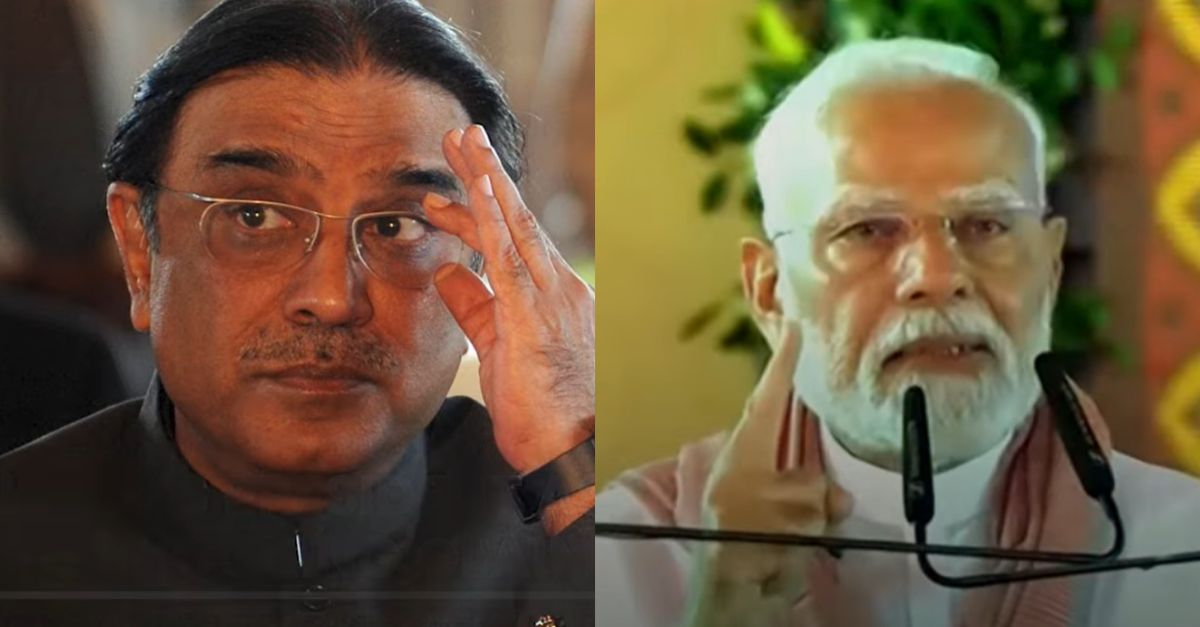
ISLAMABAD, Pakistan (Diya TV) — Pakistani President Asif Ali Zardari on Monday accused India of preparing for another military confrontation and wants New Delhi to return to dialogue, months after a tense four-day standoff between the two nuclear-armed neighbors.
Addressing a joint sitting of Parliament amid opposition protests, Zardari said statements by Indian leaders suggested they were readying for conflict similar to the May 2025 crisis that followed Operation Sindoor. He warned that another war would threaten regional stability in South Asia.
“India’s leaders say they are preparing for another war. As a lifelong advocate of regional peace, I would not recommend it,” Zardari said. He added that Pakistan remained open to negotiations.
India and Pakistan faced one of their most serious escalations in years in May 2025. The crisis began after India launched Operation Sindoor, targeting what it described as terrorist infrastructure in Pakistan and Pakistan-held Kashmir.
New Delhi said the operation responded to the April 22, 2025, attack in Pahalgam that killed 26 tourists. India blamed Pakistan-based militant groups for the assault. Islamabad denied involvement.
Pakistan responded with drone strikes. India imposed blackout measures along the Line of Control and the International Border. The standoff lasted four days and raised fears of a broader military conflict between the two countries.
Zardari said recent remarks from Indian officials signaled preparations for another confrontation. He called on India to “move away from the war theatre to meaningful negotiation tables.”
Zardari also criticized India’s stance on the Indus Waters Treaty, a landmark water-sharing agreement signed in 1960. He described India’s suspension of the treaty as an act of “hydro-terrorism.”
He accused the government led by Prime Minister Narendra Modi of attempting to use water as a political tool. He said such actions could deepen mistrust and harm millions who depend on the Indus river system.
India has argued that it has the right to review the treaty under certain conditions. The agreement governs the sharing of river waters between the two countries and has survived several wars and crises.
Zardari reiterated Pakistan’s position on Kashmir. He said lasting peace in South Asia would remain out of reach without resolving the dispute over the region.
India and Pakistan both claim Kashmir in full but administer separate parts. The region has triggered multiple wars and frequent clashes along the Line of Control.
Zardari said Pakistan would continue to offer diplomatic and moral support to the people of Jammu and Kashmir. India rejects Pakistan’s involvement and calls Kashmir an internal matter.
The Pakistani president also addressed tensions along Pakistan’s western frontier. He urged Afghanistan’s Taliban authorities to engage in dialogue to reduce friction.
Zardari warned that militant groups operating from Afghan territory pose a wider regional threat. He cited findings referenced in a United Nations report. He called on Afghanistan not to let its soil serve as a battleground for the ambitions of other countries.
“Stop being used by another country as a battlefield for their ambitions,” he said, without naming India directly.
India has repeatedly denied Pakistan’s claims that it interferes in Afghanistan. During the 2025 clashes, India’s Ministry of External Affairs rejected Islamabad’s allegations.
At the time, MEA spokesperson Randhir Jaiswal said Pakistan hosts terrorist organizations and often blames its neighbors for internal challenges. India also criticized Pakistan’s position on Afghanistan during the standoff.
Last month, India condemned Pakistani airstrikes on Afghan territory during Ramadan. Indian officials said the strikes caused civilian casualties and aimed to deflect attention from domestic issues.
The renewed war rhetoric has raised concerns about stability in South Asia. India and Pakistan both possess nuclear weapons. Even limited clashes can trigger global alarm.
Diplomatic ties between the two countries remain strained. Trade remains limited. Political dialogue has stalled in recent years.
Zardari’s remarks signal Pakistan’s call for talks. However, tensions over Kashmir, terrorism, and water sharing continue to block progress.
For now, the region watches closely. Any new military confrontation between India and Pakistan could carry serious consequences for regional and global security.