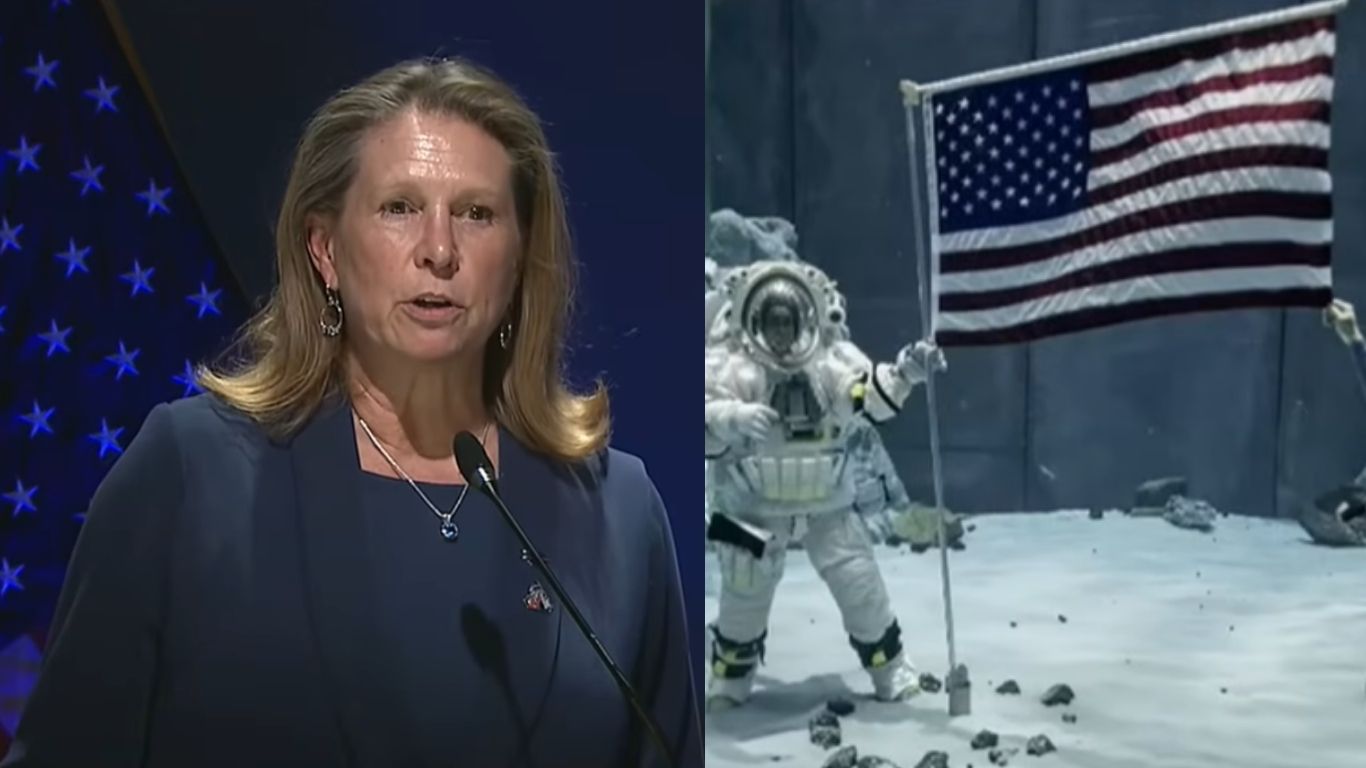
WASHINGTON (Diya TV) — NASA has unveiled a bold new strategy to return Americans to the Moon and build a long-term human presence on its surface. The plan signals a major shift toward faster execution, simpler systems, and stronger partnerships with private industry. NASA Administrator Jared Isaacman announced the initiative, called “Ignition,” as a turning point for the agency. He said NASA will focus on practical steps, reduce delays, and deliver results that the public can see.
The plan builds on the Artemis program, which aims to send astronauts back to the Moon for the first time since Apollo 17 in 1972. NASA will soon launch Artemis II, which will carry astronauts around the Moon. This mission will mark the first crewed step in the Artemis era.
The agency plans to follow with Artemis III next year. That mission will test spacecraft systems in Earth orbit. If successful, NASA expects to begin lunar landings with Artemis IV as early as 2028. Isaacman said NASA will follow an iterative approach, similar to the early days of the Apollo program. That means testing systems step by step instead of attempting large, complex missions all at once.
NASA’s goal goes beyond reaching the Moon. The agency wants to build a permanent presence.
“The goal is not just to reach the Moon, but to stay,” Isaacman said.
To achieve this, NASA will support frequent missions. The agency plans to work with at least two private companies to transport astronauts to the lunar surface every six months. NASA also plans to standardize rocket systems and increase launch frequency. Officials say this will reduce costs and improve reliability over time.
A key part of the strategy involves building a lunar base in phases. In the first phase, NASA will test landers, rovers, and surface systems. These missions will focus on power, communication, and mobility. The agency expects frequent launches, possibly monthly, to gather data and refine technology.
The second phase will introduce early infrastructure. This will include systems that support longer human stays. In the final phase, NASA aims to build permanent facilities that allow near-continuous human presence on the Moon. NASA also plans to shift resources away from the Lunar Gateway in its current form. Instead, the agency will focus on building systems directly on the lunar surface.
The new plan puts heavy emphasis on partnerships with private companies. NASA will send clear demand signals to industry for rockets, landers, and cargo systems. Officials believe this approach will help companies scale production and reduce costs. It will also create competition, which NASA says will improve performance. Isaacman stressed that NASA will not step back from its leadership role. The agency will embed its experts within partner teams to ensure missions succeed.
NASA says the Moon will serve as a testing ground for future missions to Mars. Technologies developed on the lunar surface will help astronauts survive longer journeys in deep space. The agency also plans to invest in nuclear power and propulsion. These systems could support missions to distant planets and improve efficiency in space travel. One planned project, called SR-1 Freedom, will test nuclear electric propulsion in space. NASA aims to launch it by 2028.
The plan also includes major internal changes. NASA wants to reduce reliance on contractors and increase its full-time workforce. The agency will hire thousands of employees and expand internship programs. It will also invest more than $1 billion each year in education and research grants. Isaacman said these steps will strengthen NASA’s core skills and prepare the next generation of scientists and engineers.
The strategy aligns with policies set under former President Donald Trump, which emphasize U.S. leadership in space and competition with other global powers. NASA leaders say urgency is critical. They warn that delays could weaken the nation’s position in space exploration.
Isaacman called the initiative a moment to “focus and deliver.” He said NASA must move beyond planning and start executing missions quickly.
“This is the moment when ideas become missions,” he said.
With multiple launches planned, new partnerships forming, and long-term goals set, NASA is entering a new phase of space exploration. The agency hopes this effort will not only return humans to the Moon but keep them there for generations.