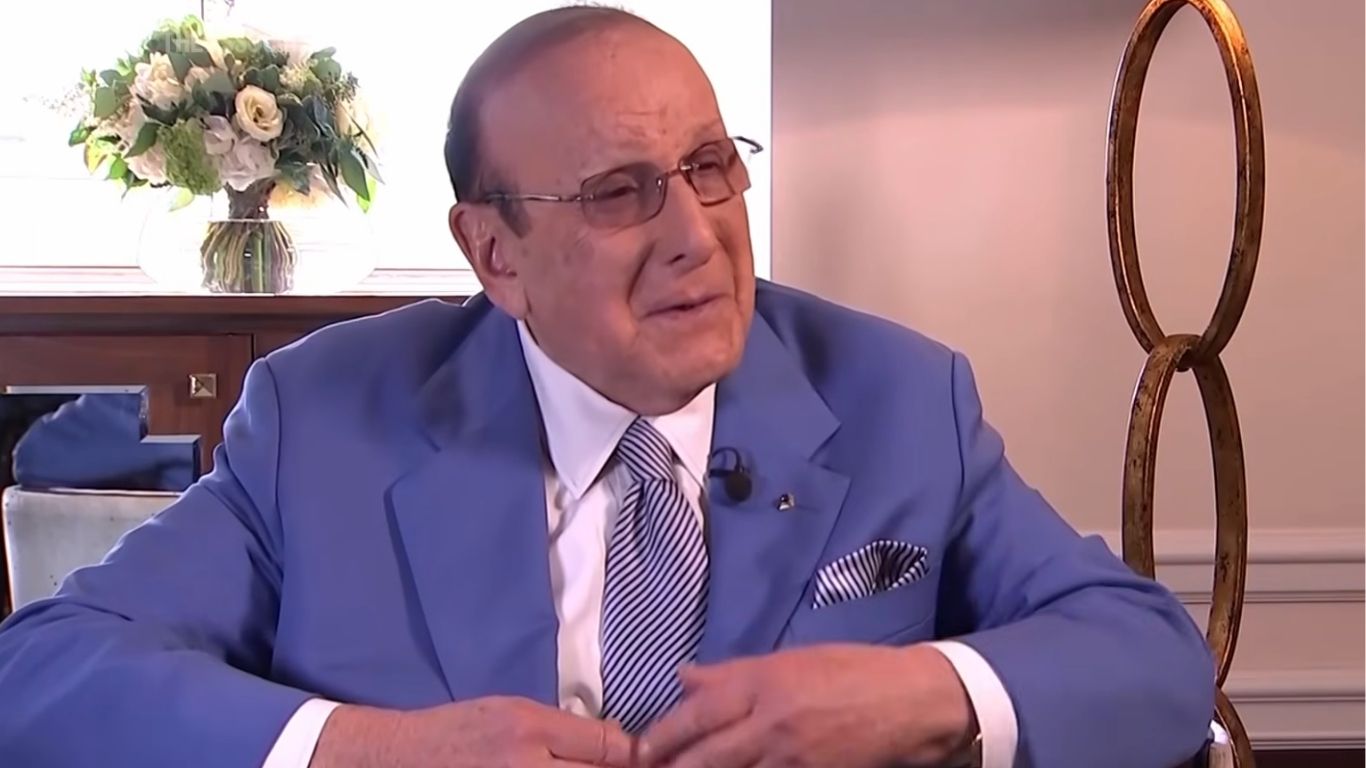
NEW YORK (Diya TV) — Clive Davis, the influential music executive who helped launch and shape the careers of some of the biggest names in modern music, died Monday at his home in New York City. He was 94.
His longtime representative, Aliza Rabinoff, confirmed his death. She said Davis died peacefully from an age-related illness while surrounded by family and loved ones.
Davis built one of the most remarkable careers in music industry history. Over seven decades, he discovered, guided, and promoted artists who went on to define generations of popular music. His roster included Whitney Houston, Bruce Springsteen, Aretha Franklin, Carlos Santana, Alicia Keys, Janis Joplin, Barry Manilow, and Carrie Underwood.
His family remembered him as both a music icon and a devoted father and grandfather.
“To the world, our father was the iconic music legend whose vision, instincts, and relentless pursuit of excellence shaped the soundtrack of countless lives,” the family said in a statement. “To his family, Clive was Dad and Granddaddy, the steady presence at the center of our lives.”
Davis remained active in the music business until his final years. Most notably, he continued to host his famous annual pre-Grammy gala, one of the entertainment industry’s most anticipated events.
Born in Brooklyn on April 4, 1932, Davis faced hardship early in life. Both of his parents died before he turned 19. As a result, he relied on scholarships to attend New York University and later Harvard Law School. Those experiences shaped his determination and strong work ethic.
After graduating from Harvard, Davis began his career as a lawyer. Soon afterward, he joined CBS and quickly rose through the ranks. In 1967, at age 35, he became president of Columbia Records.
A turning point came later that year when Davis attended the Monterey Pop Festival in California. There, he witnessed the growing power of rock music and recognized its cultural impact. Soon after, he signed Janis Joplin and helped transform Columbia into a major force in rock music.
Under his leadership, Columbia signed and developed artists such as Santana, Billy Joel, Chicago, Earth, Wind, and Fire, Pink Floyd, and Bruce Springsteen. Consequently, the label became one of the most successful music companies of its era.
However, Davis faced a major setback in 1973 when CBS fired him amid allegations involving company expenses. Although authorities later cleared him of the most serious claims, the controversy temporarily derailed his career.
Nevertheless, Davis quickly rebounded. In 1974, he launched Arista Records and turned it into one of the industry’s most successful labels. Through Arista, he signed and worked with artists including Barry Manilow, Aretha Franklin, Dionne Warwick, Patti Smith, and the Grateful Dead.
Perhaps no artist became more closely linked to Davis than Whitney Houston. After discovering her in the early 1980s, he helped guide her rise to global stardom. Houston went on to become one of the best-selling recording artists of all time.
Davis often praised Houston’s extraordinary talent. Following her death in 2012, he described the loss as deeply painful and tragic.
Meanwhile, he continued to adapt to changing trends in the music business. After leaving Arista in 2000, he founded J Records. There, he helped launch the careers of Alicia Keys and several other successful artists. Later, he worked with stars such as Usher, Kelly Clarkson, and Carrie Underwood.
Industry leaders frequently praised Davis for his unique ability to identify talent and understand commercial success. Franklin once called him “the greatest record man of all time.” Santana described him as someone with a childlike passion for music and an exceptional ear for talent.
In 2013, Davis published his memoir, “The Soundtrack of My Life.” In the book, he publicly revealed that he was bisexual. He shared details about his personal journey and relationships, adding another chapter to a life already marked by achievement and reinvention.
In recent years, Davis faced several health challenges. In 2021, Bell’s palsy forced him to postpone his annual pre-Grammy gala. More recently, he was hospitalized in May due to an upper respiratory issue. However, he later returned home and appeared to be recovering.
Throughout his life, Davis helped shape the sound of popular music across multiple generations. His influence extended far beyond record sales and chart success. Instead, he played a central role in discovering artists, building careers, and shaping modern music culture.