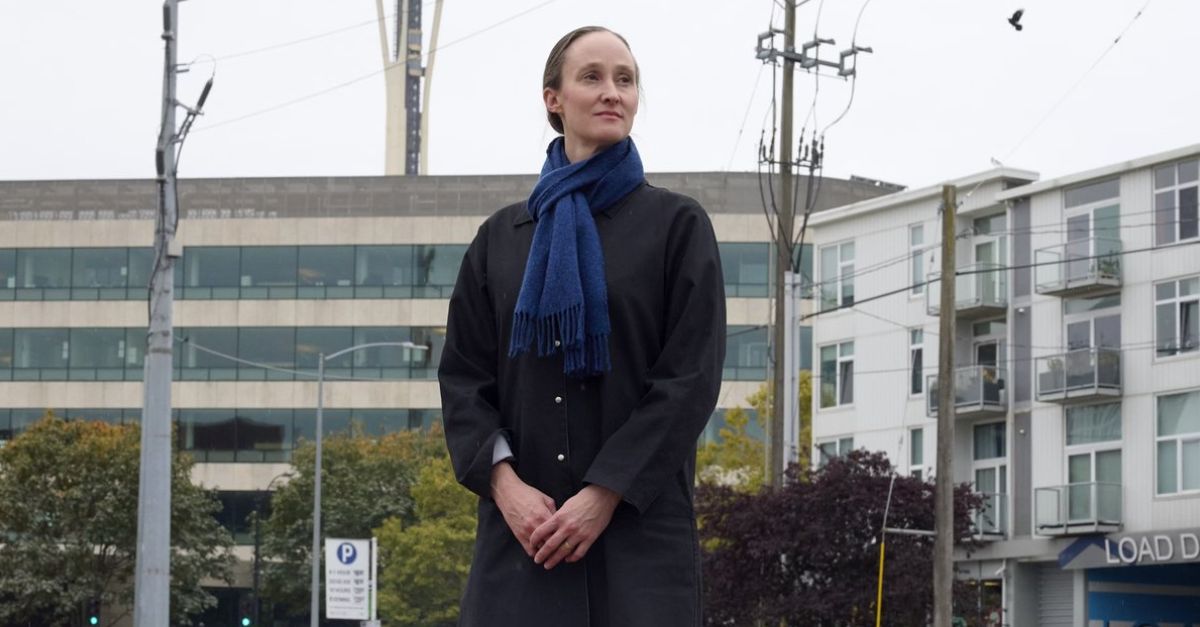
SEATTLE (Diya TV) — Voters in Seattle sent a clear message this week: change is coming. Community organizer and political newcomer Katie Wilson, 43, will become the city’s next mayor after incumbent Bruce Harrell conceded the race Thursday. Her victory signals a major shift in the city’s leadership and the direction of local politics.
Wilson ran on a progressive platform that called for higher taxes on the wealthy, expanded public transit access, stronger renter protections, and new housing to address Seattle’s affordability crisis. She co-founded the advocacy group Transit Riders Union and had never held elected office before this year.
Early in the ballot count, Harrell held a comfortable lead, but as later-returned ballots were tallied — ballots that tend to favor younger and more progressive voters — Wilson caught up and overtook him. She finished ahead by roughly 2,018 votes out of 276,240 cast — a margin large enough under Washington state law to avoid a mandatory machine recount.
Wilson lives in a rented 600-square-foot apartment, does not own a car, and speaks repeatedly about her own struggle to live in a fast-growing, expensive city. Her personal story resonated with Millennials and Gen Z voters confronting the same challenges.
In her victory speech, Wilson said, “This is your city too. I am a coalition builder.” She emphasized unity and collective responsibility, even as she pushed for bold progressive change.
Harrell, 67, who had served decades in Seattle civic life, publicly congratulated Wilson after the race was called. “It was a very delightful conversation,” he said after speaking to her. “I feel very good about the future of this country and this city still.”
While Harrell ran as a moderate Democrat focused on continuity and stability, Wilson framed her campaign as a rejection of the establishment. The usual advantages of incumbency — deep-pocketed donors, broad endorsements, and extensive name recognition — did not prevent the upset.
Housing affordability was the major battleground in the campaign. Seattle’s rapid growth and influx of tech-industry wealth left many residents feeling squeezed. Wilson tapped into that frustration and pledged to take action.
Her priorities include universal child care, improved mass transit, stable, affordable housing for renters, and increased community ownership of land and wealth. She takes office as the city gears up for a new era, supported by a city council that appears ready to collaborate, with multiple progressive challengers also winning seats.
The transition will not be without hurdles. Wilson will step into a role overseeing a large city government, a budget of nearly $9 billion, and thousands of employees. She acknowledged her lack of prior elected experience but said she will lead by building coalitions and listening to the community.