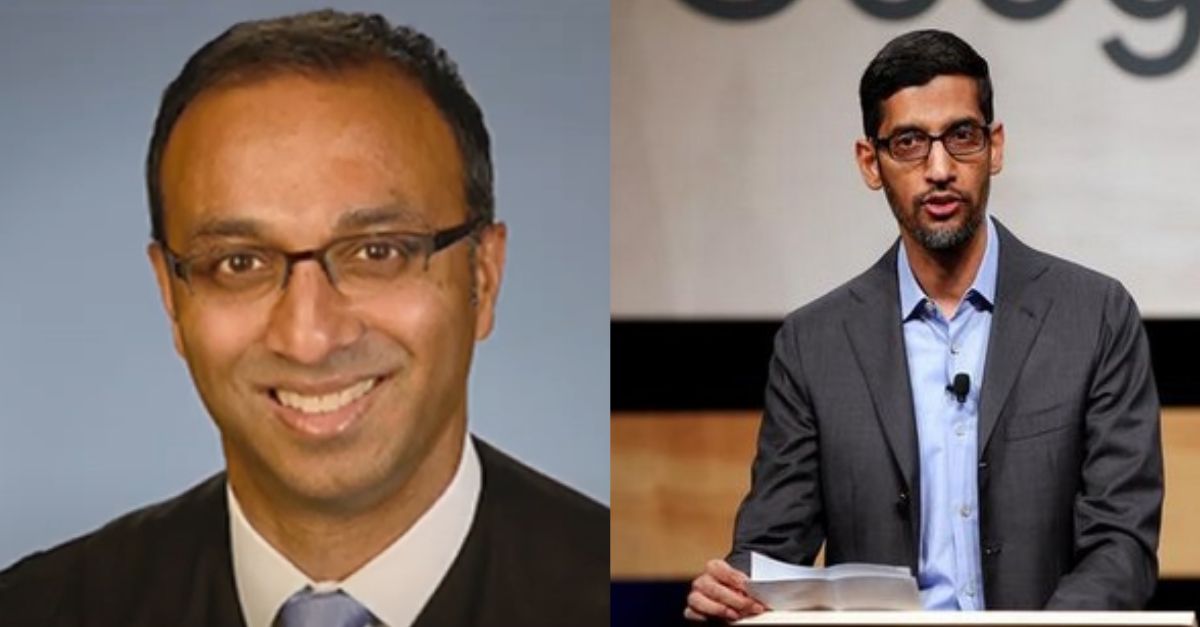
WASHINGTON (Diya TV) — A federal judge has ordered Google to change how it operates its search business. This ruling is one of the most significant antitrust decisions since the Microsoft case in the late 1990s. While the decision does not require Google to sell its Chrome browser, it imposes new limits on the company’s power in search.
U.S. District Judge Amit Mehta ruled that Google must end exclusive agreements that made its search engine the default on smartphones and other devices. The ruling also requires the company to share some of its search index and user interaction data with competitors. Additionally, a six-year oversight committee will monitor compliance.
The order aims to reduce Google’s monopoly over online search. For years, the company paid billions to partners like Apple and Samsung to preload its search engine on their devices. These contracts excluded competitors and fueled the Justice Department’s case. Mehta concluded that these agreements violated antitrust laws, but he believed that banning them completely would harm consumers more than help.
At the same time, the judge allowed Google to continue paying device makers to preload its products, including its Gemini AI chatbot. The main restriction is that these agreements cannot be exclusive. This balance reflects the court’s effort to limit anti-competitive behavior without dismantling the entire system that supports much of today’s internet economy.
The Justice Department had sought extensive changes, including a separation of Chrome from the search engine. Prosecutors argued that splitting the browser from the search engine was necessary to restore fair competition. However, Mehta rejected this proposal. He noted that such a move would be messy and risky, adding that Google’s dominance did not stem entirely from illegal actions.
Instead, the court focused on improving access to data. By requiring Google to share parts of its search index and interaction data, Mehta hopes to give smaller competitors a chance. He mentioned the rise of generative artificial intelligence, which is already changing how people search online. Rivals like ChatGPT and Perplexity are entering the market with conversational “answer engines.”
“Unlike the typical case where the court resolves a dispute based on past facts, here the court is asked to look to the future,” Mehta wrote. He suggested that AI-driven competition offers hope for a more open market.
Investors responded positively to the ruling, seeing it as a minor setback for Google. Shares of its parent company, Alphabet Inc., rose nearly 3% in extended trading. However, rivals had mixed reactions. Perplexity, an AI search startup, had shown interest in buying Chrome for $34.5 billion, expecting a court-ordered sale that did not happen.
Google executives were relieved to avoid that outcome. “The court recognized that divesting Chrome and Android would have gone beyond the case’s focus on search distribution and would have harmed consumers and our partners,” said Lee-Anne Mulholland, the company’s vice president of regulatory affairs. She warned that sharing search data would impact users and their privacy.
The Justice Department, however, may not be satisfied with the ruling. “We proved in court that competition has been frozen for two decades in internet search,” said Abigail Slater, assistant attorney general of the Antitrust Division. She added that the agency is considering whether the ruling goes far enough to restore competition.
Apple and other recipients of Google’s contracts supported the decision to keep default search deals intact. Apple informed the court earlier this year that banning the contracts would cost it more than $20 billion annually. The company argued that this funding supports its research. It also warned that removing the agreements could inadvertently strengthen Google by freeing up cash it currently pays to partners.
The ruling concludes one chapter in a nearly five-year antitrust battle but leaves the future of online search uncertain. By avoiding a breakup while forcing Google to open its data, the court is banking on innovation, particularly from AI, to drive the next wave of competition.
For consumers, the decision means Google search will remain the leader for now. However, new options could arise as competitors gain access to the data they need to compete. Whether those challengers can break Google’s grip on the market is still uncertain.