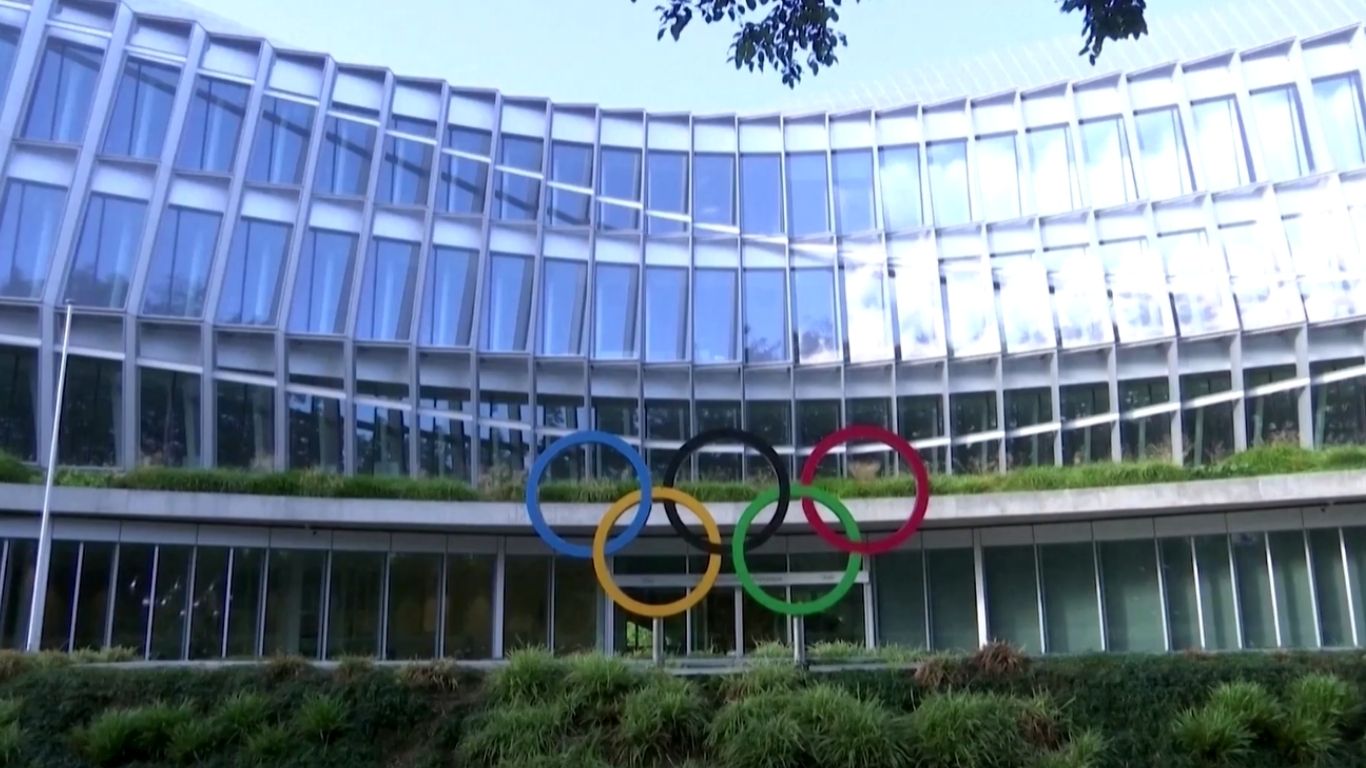
GENEVA, Switzerland (Diya TV) — The International Olympic Committee has approved a new eligibility policy that will bar transgender women from competing in women’s events at the Olympic Games. The decision comes ahead of the 2028 Los Angeles Olympics and marks a major shift in global sports policy. The IOC announced Thursday that only athletes classified as biological females will be eligible to compete in female categories. Officials said the new rule aims to protect fairness and integrity in women’s sports.
The updated guidelines require athletes to undergo a one-time gene test during their careers. This test will determine eligibility for women’s events at the Olympics and other IOC competitions. The IOC said the test will detect the SRY gene, which is usually found on the Y chromosome. Experts believe this gene plays a key role in male biological development. Testing methods may include saliva samples, cheek swabs, or blood tests. IOC President Kirsty Coventry said the move creates a clear and consistent policy. She said fairness remains critical in elite competition.
“At the Olympic Games, even the smallest margins matter,” Coventry said. “It would not be fair for biological males to compete in the female category.”
The decision aligns with policies promoted by Donald Trump, who signed an executive order on sports eligibility—his order aimed to restrict transgender athletes from competing in women’s sports in the United States. The IOC confirmed the policy will take effect starting with the 2028 Summer Games in Los Angeles. The organization said the rule will not apply retroactively. It also will not affect grassroots or recreational sports programs.
It remains unclear how many transgender women compete at the Olympic level. No openly transgender woman competed at the 2024 Paris Games. However, Laurel Hubbard made history by competing at the Tokyo Olympics in 2021. The new rules will also affect athletes with differences in sex development, known as DSD. This includes Caster Semenya, a two-time Olympic champion who has challenged similar regulations in court. Semenya previously won a case at the European Court of Human Rights. However, that ruling did not overturn existing track and field rules on eligibility.
The IOC said its decision relies on scientific research. Experts found that biological males often retain physical advantages even after transitioning. According to the IOC, males experience three major testosterone peaks during development. These occur before birth, in infancy, and during puberty. These hormonal changes can affect strength, endurance,e and power. The organization reported that male athletes show performance advantages of 10% to 12% in running and swimming. The gap increases to at least 20% in jumping and throwing events. In explosive sports like boxing, the advantage may exceed 100%.
The new policy has already sparked debate. Human rights groups and advocacy organizations are expected to challenge the decision. Critics argue that mandatory gene testing raises ethical and privacy concerns.
Some athletes have already responded. Lin Yu-ting, who faced scrutiny during the Paris Olympics, passed a gene test and remains eligible to compete. Meanwhile, Imane Khelif has said she plans to undergo testing to qualify for the 2028 Games. The IOC said it consulted athletes and experts worldwide before finalizing the policy. Officials conducted interviews and reviewed scientific data to support their conclusions.
The decision marks a major shift in how global sports bodies handle gender eligibility. In recent years, individual sports federations created their own rules. Now, the IOC has taken a unified approach. Coventry said the goal is to balance inclusion with fairness. She emphasized that the Olympic Charter still supports access to sport as a human right. As the 2028 Olympics approach, the policy will likely remain a central issue in international sports. The debate over fairness, inclusion, and science is far from over.