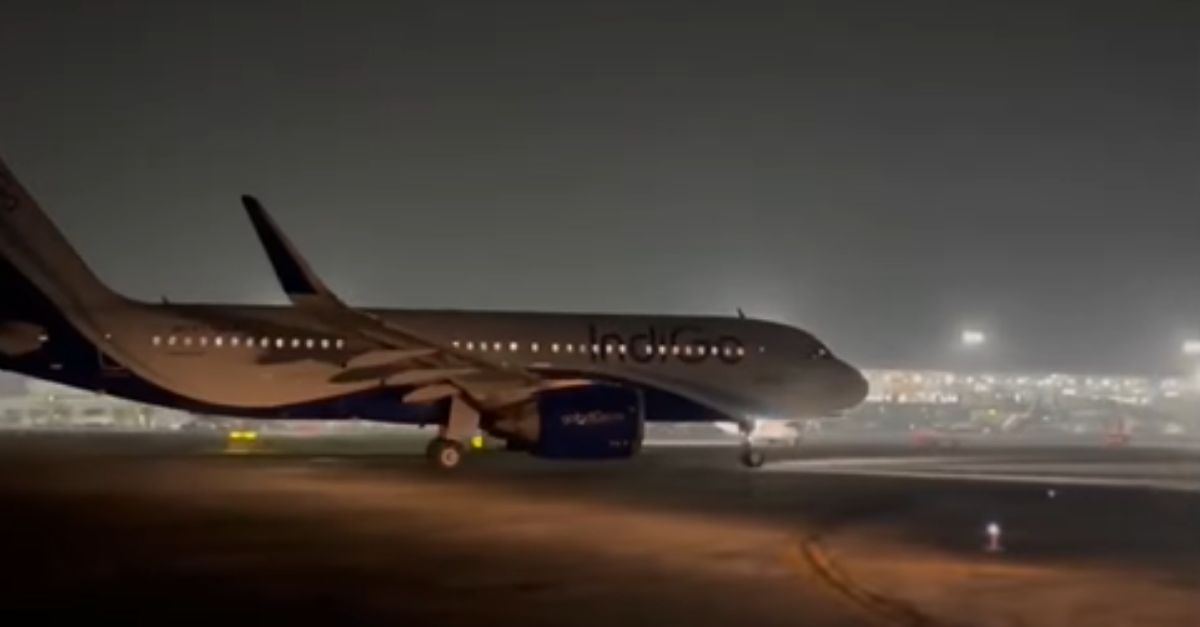
KOLKATA, India (Diya TV) — The first direct flight between India and China in five years landed in Guangzhou early Monday, marking a major step toward restoring travel and rebuilding ties between Asia’s two largest nations after years of tension and pandemic-related restrictions.
IndiGo flight 6E1703 departed from Kolkata and touched down in Guangzhou shortly before 4 a.m. local time. The flight officially reopened nonstop air links between the two countries, which had been suspended since 2020 because of COVID-19 and worsening geopolitical relations.
India’s Ministry of External Affairs said the move will boost people-to-people contact and help in the gradual normalization of bilateral exchanges. The restart also reflects cautious optimism after years of strained relations, especially since the deadly 2020 border clash in the Himalayas that left 20 Indian and four Chinese soldiers dead. Many passengers on the first flight were Indian business travelers eager to explore new trade and investment opportunities.
“It was such a smooth and easy, lovable trip,” said Rashika Mintri, a 44-year-old interior designer from Kolkata. “I could come again and again.”
Abhijit Mukherjee, the pilot of the historic flight, said the new route would save travelers time and money. “Without the nonstop service, passengers had to connect through Bangkok or Singapore. It adds up,” he said while holding a bouquet presented to him at the airport.
At Guangzhou Baiyun International Airport, officials held a ribbon-cutting ceremony to celebrate the milestone. The return leg to Kolkata also drew a crowd, with passengers lining up to check in for the first direct flight from mainland China to India since 2020. The resumption of flights comes as India and China cautiously rebuild diplomatic and economic ties. The two countries, home to nearly 3 billion people combined, have remained strategic rivals even as trade between them continues to grow.
India still runs a large trade deficit with China, relying on Chinese raw materials for manufacturing and exports. However, recent meetings between Prime Minister Narendra Modi and President Xi Jinping — in Russia last year and in China in August — have signaled a willingness to ease tensions.
This month, Indian and Chinese troops exchanged sweets along the border during the Hindu festival of Diwali, a rare gesture of goodwill between the two militaries stationed along their contested 3,500-kilometer (2,175-mile) frontier. For Kolkata, the new flight revives a connection with deep historical roots. During British colonial rule, Chinese migrants settled in the city as traders and artisans, leaving a lasting mark on its culture.
“Air connectivity will boost trade, tourism, and business travel,” said Chen Khoi Kui, a community leader in Kolkata’s Chinatown district of Tangra. “It’s great news for people like us who have relatives in China.”
Kolkata’s famous Indo-Chinese cuisine, born from this shared history, remains a beloved part of the city’s culinary identity. The warming of India-China relations comes amid friction between New Delhi and Washington. U.S. President Donald Trump’s new 50 percent tariffs have strained trade ties with India, while his aides have accused New Delhi of buying Russian oil and indirectly supporting Moscow’s war in Ukraine.
Analysts say India’s renewed engagement with China sends a calculated diplomatic signal to Washington that New Delhi is keeping its foreign policy options open.
“The flight marks a small but significant step,” said Athar Ali, a 33-year-old Indian businessman who was among the passengers on the return trip. “Direct travel will make it easier to do business and build connections again.”
Nonstop services between the two nations once operated about 500 flights a month before the pandemic. Additional direct routes — including those linking New Delhi with Shanghai and Guangzhou — are expected to begin in November.
The IndiGo service from Kolkata to Guangzhou is seen as the start of a broader push to reopen travel and rebuild trust. As The Indian Express recently noted, better relations with Beijing “send an appropriate signal” to Washington, though challenges remain. “Managing an increasingly assertive China remains India’s long-term challenge,” the paper wrote.