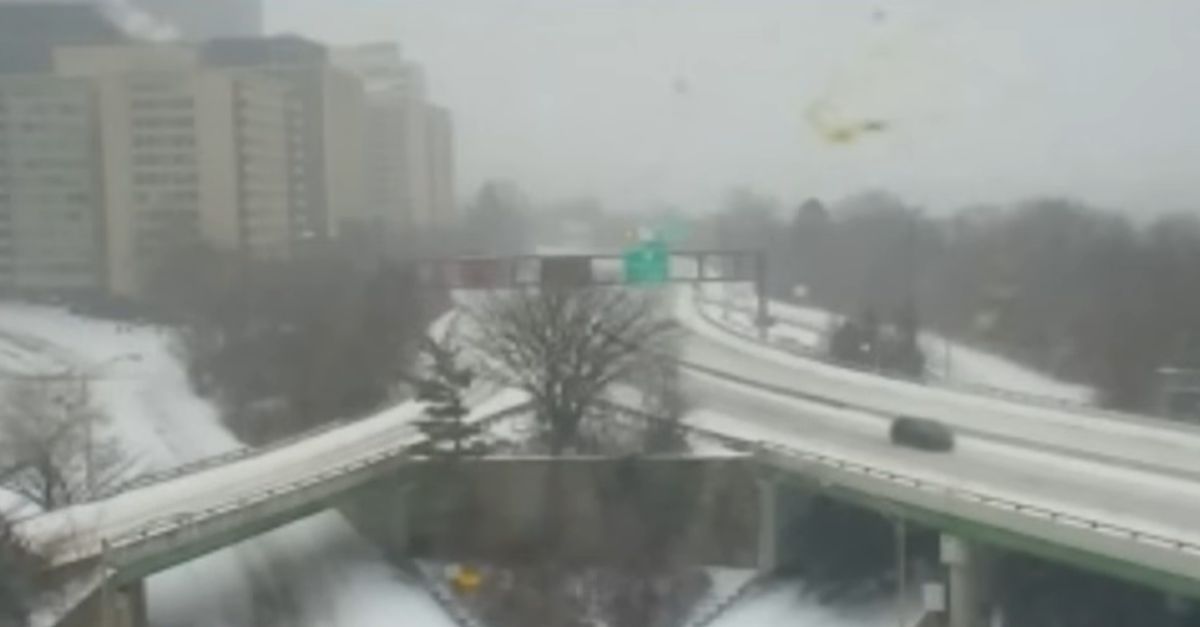
CHICAGO (Diya TV) — A massive winter storm known as Winter Storm Fern has pounded much of the United States this week, leaving a trail of snow, ice, power outages and dangerous travel conditions across more than 40 states. The storm, which meteorologists describe as one of the most expansive systems in years, has caught the nation in a grip of a deep cold that experts say will take time to break.
From Texas to New England, this system has delivered a rare combination of heavy snow and crippling ice. In parts of the Midwest and Northeast, blinding snow has buried roads and canceled schools while southern states that rarely see winter weather have been knocked off balance by thick ice. The storm’s broad reach has put energy grids, transportation networks and emergency services to the test.
Across large swaths of the South, ice has been the dominant threat. Freezing rain glazed highways and bridges, coating trees and power lines until they simply gave way. Utility operators reported hundreds of thousands of customers without power, and in some places more than a million people were left in the cold as temperatures plunged below freezing. Officials warned that ice damage often takes longer to repair than snow because downed power lines must be replaced and dangerous conditions slow restoration crews.
In the Northeast, deep snow has created its own set of challenges. Cities across Pennsylvania, New Jersey and New York saw significant accumulations that forced road closures and left neighborhoods buried. Snow crews worked around the clock, but bitter temperatures and ongoing flurries have made every plow battle uphill. Local residents described the scene as “winter at full force,” with drifts reaching well above sidewalks and visibility reduced to near zero at times.
Travel disruptions have been widespread. Airports in New York, Chicago, Atlanta and other major hubs recorded thousands of canceled and delayed flights, making this one of the busiest periods of travel disruption in recent memory. On the ground, highways turned slick and dangerous as drivers encountered black ice and snowpack, leading authorities to urge people to stay home where possible.
The human toll has been sobering. Officials across several states have confirmed multiple deaths tied to the storm, including traffic crashes on icy roads and exposure to extreme cold. Emergency response teams have been assisting with everything from vehicle accidents to hypothermia cases as frozen conditions linger.
Forecasters say that while the worst of the precipitation may be tapering in some areas, the cold air behind Winter Storm Fern is not going away soon. Arctic temperatures are expected to linger well below average into the coming days, prolonging hazardous conditions for travel and recovery efforts. In some regions, a renewed threat of additional snow later this week has forecasters warning residents to remain prepared.