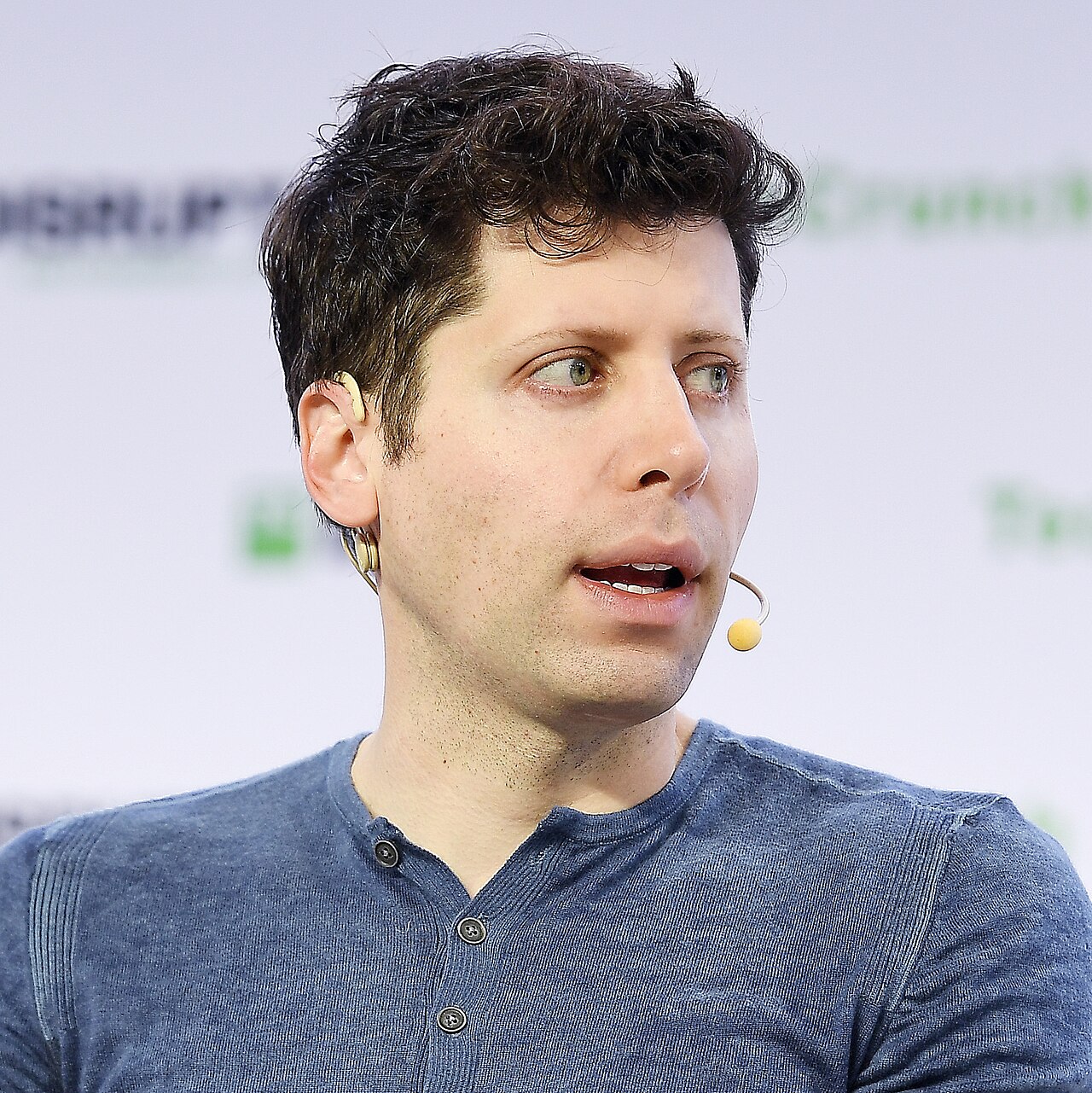
NEW YORK (Diya TV) — Pulitzer Prize-winning journalist Ronan Farrow and New Yorker staff writer Andrew Marantz have published a sweeping investigation into Sam Altman and OpenAI, titled “Sam Altman May Control Our Future — Can He Be Trusted?” The piece, the product of 18 months of reporting, draws on never-before-disclosed internal documents and interviews with more than 100 people with firsthand knowledge of how Altman conducts business. What it describes is a portrait of a leader whose public commitments and private conduct have repeatedly diverged.
At the center of the investigation are two core documents: a roughly 70-page confidential memo compiled in the fall of 2023 by former OpenAI Chief Scientist Ilya Sutskever, and over 200 pages of internal notes accumulated by Anthropic CEO Dario Amodei during his time at OpenAI. Both documents had never previously been disclosed.
The Sutskever memo, which includes Slack messages, HR documents, and phone-captured screenshots allegedly taken to evade company device monitoring, begins with a list that reads “Sam exhibits a consistent pattern…” with the first item being “Deception.” The memo accuses Altman of distorting facts to executives and the board and deceiving colleagues on security processes.
The Amodei notes, titled “My Experience at OpenAI,” state plainly that “The problem with OpenAI is Sam himself.” Amodei, who left OpenAI to co-found Anthropic, alleges that Altman personally denied contractual terms in real time while facing Microsoft during a $1 billion investment negotiation.
One former OpenAI board member offered the starkest characterization in the piece: “He’s unconstrained by truth. He has two traits that are almost never seen in the same person. The first is a strong desire to please people, to be liked in any given interaction. The second is almost a sociopathic lack of concern for the consequences that may come from deceiving someone.”
The investigation also sheds new light on what happened in the chaotic days following Altman’s brief firing by the OpenAI board in November 2023. In the days after his firing, Altman fought to avoid any outside investigation of the claims against him. He told two people that he worried even the existence of an investigation would make him look guilty, though Altman denies this. After the resigning board members made their departure conditional on an independent inquiry, Altman acceded to a “review” of “recent events.” Six people close to the inquiry alleged that it seemed designed to limit transparency.
The law firm WilmerHale, known for leading investigations into Enron and Tyco, was responsible for the inquiry but only orally briefed two new directors, with the decision not to produce a written report partly based on advice from those directors’ private lawyers. Insiders described the investigation as seeming to be aimed at limiting transparency.
On the question of AI safety, the reporting is particularly damaging. OpenAI was founded as a nonprofit with an explicit mission to prioritize the safety of humanity above commercial success. In mid-2023, OpenAI pledged a fifth of its computing power to a “superalignment team” charged with preventing AI from causing harm to humanity. But the New Yorker reports that the team received only around 1% to 2% of that compute, allocated to the oldest hardware available, and was later dissolved. When journalists asked to speak with researchers working on existential safety, an OpenAI representative responded: “That’s not, like, a thing.”
Altman told the New Yorker that his “vibes don’t match a lot of the traditional AI-safety stuff,” and said only vaguely that OpenAI would still “run safety projects, or at least safety-adjacent projects.”
The investigation also details a pattern of public advocacy for AI regulation that conflicted sharply with private lobbying against it. In 2022 and 2023, OpenAI successfully pressed to dilute a European Union effort that would have subjected large AI companies to more oversight. In 2024, a bill was introduced in the California state legislature mandating safety testing for AI models, its provisions resembling ones Altman had advocated for in congressional testimony. OpenAI publicly opposed the bill but in private began issuing threats. “I would say that, over the course of the year, we saw increasingly cunning, deceptive behavior from OpenAI,” a legislative aide told the reporters.
Beyond domestic politics, the piece examines Altman’s financial relationships with Gulf state governments. In the fall of 2023, Altman began quietly recruiting new talent for a plan eventually known as ChipCo, in which Gulf states would provide tens of billions of dollars to build semiconductor infrastructure. Several Microsoft executives are quoted expressing alarm. One stated that Altman “distorts, twists, renegotiates, and violates agreements,” and said there was a small but real possibility Altman would ultimately be remembered like a Ponzi scheme perpetrator.
The investigation also reveals that in 2018, the OpenAI executive team discussed an internal initiative dubbed the “National Plan,” in which major nations including China and Russia would bid for OpenAI’s AI technology, described as creating a situation where all countries would have to fund the company. The plan was shelved after multiple employees threatened to resign.
The investigation arrives at a consequential moment for OpenAI, which is preparing for a major IPO and navigating reported internal tensions. Separately, The Information reported on the same day that OpenAI CFO Sarah Friar had told colleagues she did not believe the company would be ready to go public in 2026.
OpenAI did not issue a public response to the investigation at the time of publication.