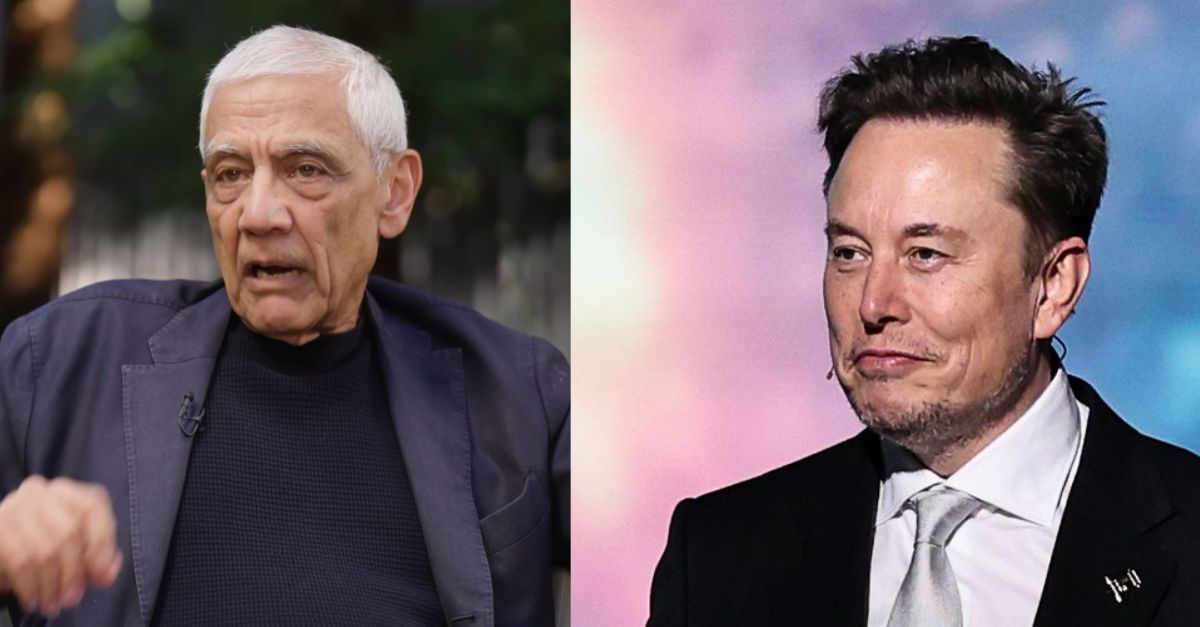
SAN FRANCISCO (Diya TV) — A sharp public clash between Tesla and SpaceX CEO Elon Musk and venture capitalist Vinod Khosla has reignited debate in Silicon Valley over race, immigration, and the social responsibilities of tech leaders. The exchange unfolded on Musk’s social media platform X and quickly drew global attention. The dispute highlights growing political and cultural divides within the technology industry, where influential executives increasingly use online platforms to voice strong and often polarizing views.
The row was triggered after an older Musk post resurfaced online. In that post, Musk noted that white people are becoming a smaller share of the global population. Critics argued the comment echoed themes often associated with racial anxiety.
The controversy deepened earlier this month when Musk reacted with a “100” emoji to a post suggesting white men could face an existential threat if they became a minority. Many users interpreted the emoji as an endorsement of that claim. Musk has denied that his views are rooted in race. He has said his concerns focus on public safety, economic pressure, and social cohesion, particularly in debates over immigration.
Vinod Khosla, a co-founder of Sun Microsystems and a leading Silicon Valley investor, publicly challenged Musk’s statements. Khosla accused the billionaire entrepreneur of promoting what he called “WAGA,” or “White America Great Again,” rather than the “Make America Great Again” movement.
In a post on X, Khosla urged non-white employees at Tesla, SpaceX, and X, along with what he described as “decent whites,” to quit their jobs and consider working at companies backed by Khosla Ventures. He framed the issue as a moral test for the tech industry. Khosla argued that focusing on race undermines merit and inclusion. He warned that normalizing such ideas could harm both innovation and social trust.
Musk responded with a series of blunt and personal remarks. He called Khosla “pompous” and referenced a past dispute in which Khosla sought to limit public access to a beach near his home. Musk used that episode to question Khosla’s credibility on social issues.
Musk also cited his personal life to reject accusations of racism. He noted that his partner, Shivon Zilis, is half Indian. He added that his eldest son with her carries a middle name chosen in honor of Subrahmanyan Chandrasekhar, the Nobel Prize–winning Indian-American astrophysicist.
The dispute revived scrutiny of Musk’s past comments on immigration and skilled labor. Musk has repeatedly said the United States has “benefited immensely” from talented immigrants, especially from India. He has praised Indian engineers, scientists, and entrepreneurs for their role in building America’s technology and business sectors.
Musk has defended the H-1B visa program as vital to the U.S. economy. He has argued that the main problem lies in misuse by some firms, not the program itself. According to Musk, his companies struggle to find enough highly skilled workers, making global talent essential.
He has also rejected claims that immigrants steal jobs from U.S. workers, saying the real challenge is a shortage of specialized skills.
The public feud between Musk and Khosla reflects a broader split among tech leaders over race, immigration, and political power. Silicon Valley executives now play a major role in shaping public debate, often bypassing traditional media through social platforms.