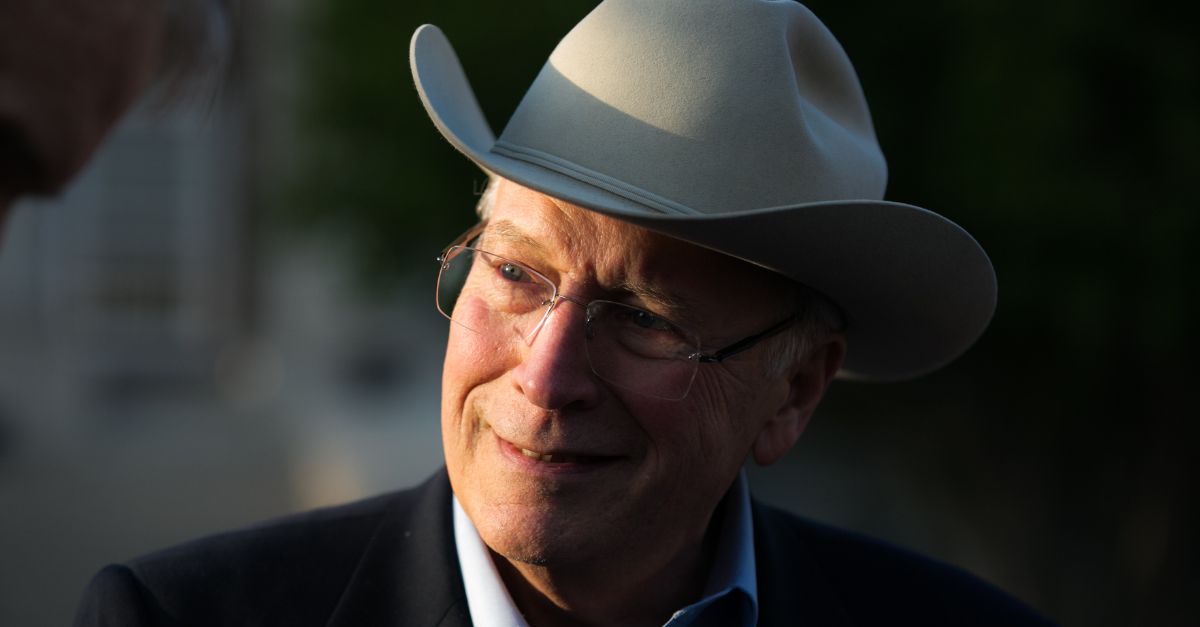
WASHINGTON (Diya TV) — Dick Cheney, the powerful vice president under George W. Bush and a chief architect of America’s post-9/11 “war on terror,” has died at 84, his family announced Tuesday. Cheney passed away from complications of pneumonia and long-standing cardiac and vascular disease, surrounded by his wife, Lynne, and daughters, Liz and Mary.
Cheney, the 46th vice president of the United States, was one of the most influential — and divisive — figures in modern American politics. Serving from 2001 to 2009, he helped steer U.S. foreign and security policy after the September 11, 2001, terrorist attacks. His influence shaped wars in Afghanistan and Iraq and expanded the powers of the presidency in ways that still resonate.
“Dick Cheney was a great and good man,” his family said in a statement. “We are grateful beyond measure for all he did for our country.”
Former President George W. Bush called Cheney a “decent, honorable man” and praised his “integrity, high intelligence, and seriousness of purpose.”
On September 11, 2001, Cheney was in the White House when hijacked planes struck the World Trade Center. From a secure bunker, he directed emergency responses and authorized the military to shoot down any additional hijacked aircraft threatening Washington.
The attacks transformed Cheney’s worldview. He became a driving force behind the U.S. invasions of Afghanistan and Iraq. Convinced that Saddam Hussein posed a grave danger, Cheney pushed the Bush administration to act. His warnings about Iraq’s weapons of mass destruction and ties to al-Qaeda, later proven false, helped justify the 2003 invasion.
Critics accused Cheney of manipulating intelligence and promoting torture through “enhanced interrogation” methods. Cheney defended those policies, insisting they were necessary to protect the nation. “I would do it again in a minute,” he said in 2014 when questioned about the Senate’s report condemning the program.
Cheney’s hawkish approach and secrecy made him one of the most controversial vice presidents in U.S. history. He championed strong executive power, arguing that the presidency had been weakened after the Watergate scandal and the Vietnam War.
By the time he left office in 2009, Cheney’s approval rating had dropped to 31%, according to the Pew Research Center. Yet he remained unapologetic about his actions, saying he had done what was necessary to keep Americans safe.
Born on January 30, 1941, in Lincoln, Nebraska, and raised in Casper, Wyoming, Richard Bruce Cheney’s early years were far from glamorous. He was expelled from Yale University and twice arrested for driving under the influence before turning his life around. He earned degrees in political science from the University of Wyoming and married his high school sweetheart, Lynne Vincent, in 1964.
Cheney rose through Washington’s ranks as a congressional aide and later as chief of staff under President Gerald Ford. Elected to Congress from Wyoming in 1978, he served six terms before becoming defense secretary under President George H.W. Bush. Cheney oversaw the 1991 Gulf War, which successfully expelled Iraqi forces from Kuwait. Afterward, he became CEO of Halliburton, a major energy firm, before returning to politics as Bush’s running mate in 2000.
In later years, Cheney grew increasingly critical of the Republican Party’s direction under Donald Trump. He condemned Trump as “a coward” and “the greatest threat to our republic.” His daughter, Liz Cheney, followed in his footsteps, sacrificing her congressional seat to oppose Trump’s efforts to overturn the 2020 election.
In a stunning turn, Cheney said he voted for Democrat Kamala Harris in the 2024 presidential election, citing his duty to defend the Constitution above party loyalty.
Cheney’s health struggles were well known. He survived five heart attacks and underwent a heart transplant in 2012, calling it “the gift of life itself.” Despite decades of illness, he remained active in public life and unyielding in his beliefs. His final years saw him embraced by political foes who once reviled him. In 2022, Democrats in Congress greeted him warmly during a January 6 anniversary ceremony honoring those who defended democracy.
Cheney is survived by his wife, Lynne, daughters Liz and Mary, and seven grandchildren.