CHANGZHI, China (Diya TV) — A gas explosion at a coal mine in northern China killed at least 82 people and injured more than 120 others, making it the country’s deadliest mining disaster in more than a decade.
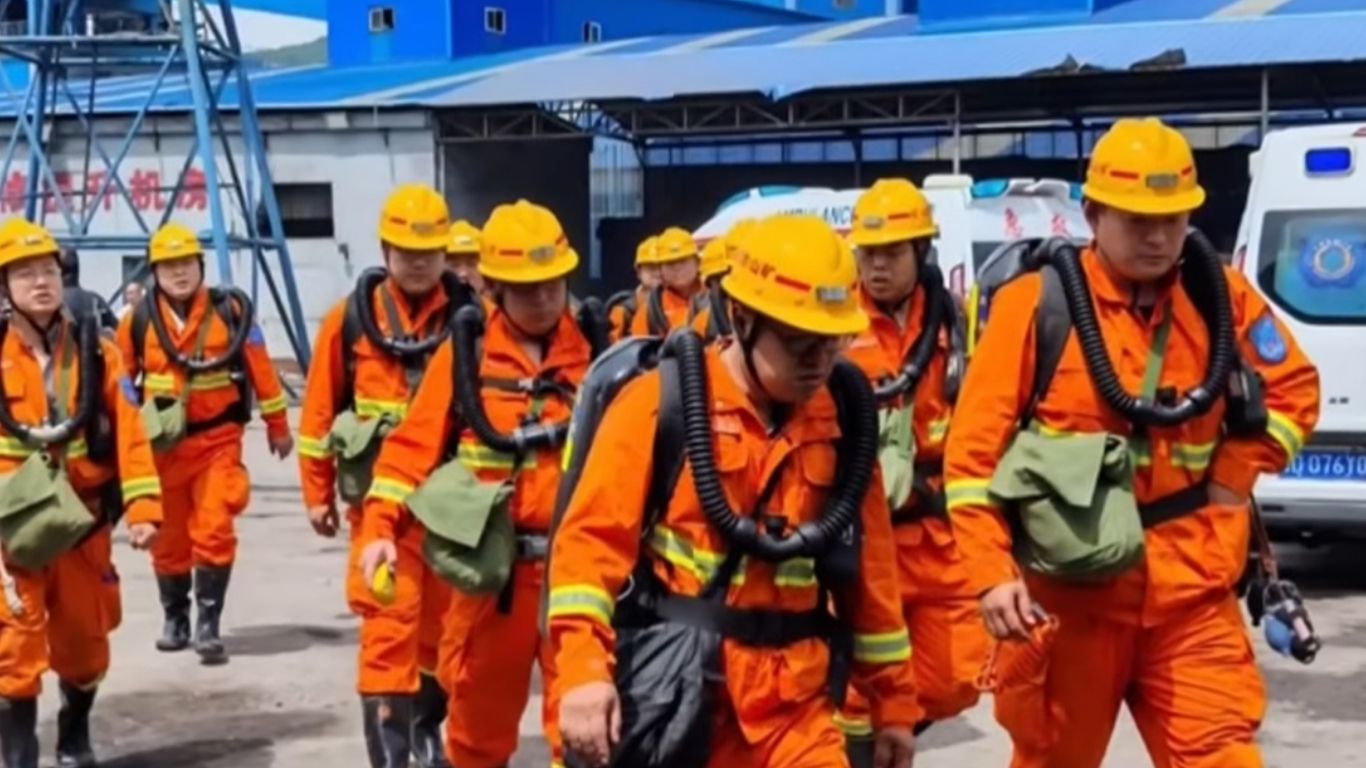
Rescue crews continued searching underground Saturday after the blast struck the Liushenyu coal mine in Shanxi province late Friday evening. State broadcaster CCTV reported that nearly 250 miners were working underground when the explosion happened about 300 meters below the surface.
Authorities said rescuers evacuated more than 200 workers from the mine. Many injured miners remain in hospitals across the region. Officials earlier reported a death toll of 90, but later revised the number to 82 because of confusion at the disaster site. The explosion has renewed concerns about coal mine safety in China, the world’s largest coal producer and consumer.
Emergency teams rushed to the mine soon after the blast. CCTV footage showed the underground area filled with water, smoke, and debris after the explosion damaged the walls and tunnels.
Rescuers brought water pipes and kayaks into the mine to reach trapped workers. However, officials said several problems slowed rescue operations. State-run Beijing News reported that maps provided by the mining company did not match the actual tunnel conditions underground. As a result, rescue workers had to search every tunnel instead of focusing on one location.
Authorities also discovered that some miners did not carry personal GPS tracking devices, even though company rules required them. This made it harder for emergency teams to identify where workers might be trapped. Officials warned that dangerous gas levels inside the mine continued to threaten rescue crews.
“During the rescue work, toxic and harmful gases have exceeded the limit for a long time, and there is a risk of secondary disasters,” Zhang Wenbo, head of Changzhi city’s emergency management bureau, said during a news conference Saturday evening.
One injured miner, Wang Yong, described the terrifying moments after the blast. He told CCTV that he noticed smoke and smelled sulfur moments before the explosion spread through the tunnels.
“I told people to run,” Wang said. “While running, I saw people who had been choked and knocked down by the smoke, and then I fainted too,” Wang said. He regained consciousness about an hour later and escaped the mine with several coworkers. The county chief of Qinyuan, where the mine operates, admitted that confusion at the scene created problems during the early response.
“After the accident, the scene was chaotic,” the official said. “The company could not provide a clear count of the number of workers on site.”
Chinese President Xi Jinping ordered a “thorough investigation” into the coal mine explosion and demanded accountability for those responsible. State media reported that Vice Premier Zhang Guoqing traveled to the disaster site Saturday evening to oversee emergency operations. Authorities said preliminary findings showed the mining company committed “major violations of the law.” Officials also confirmed that they placed the company’s head under legal detention.
CNN reported that a person answering the phone at Shanxi Tongzhou Group Liushenyu Coal Industry said they were “not aware of the situation” before ending the call. Chinese authorities also announced plans to intensify crackdowns on illegal mining practices. Officials will focus on false safety records, hidden mining operations, and inaccurate worker reporting systems.
The Shanxi coal mine disaster is the deadliest mining accident in China since a 2009 explosion in Heilongjiang province killed 108 people. China’s mining industry suffered frequent deadly accidents during the early 2000s. Since then, the government has tightened regulations and improved safety standards. However, serious accidents still happen regularly. In 2023, a mine collapse in Inner Mongolia killed 53 workers. Chinese officials later introduced stricter coal mining safety regulations that required operators to conduct more inspections and improve oversight.
Coal remains critical to China’s economy and energy supply. The fuel accounts for more than half of the country’s energy consumption. China also continues expanding coal infrastructure to support power grid stability as it increases renewable energy production.
Shanxi province plays a major role in the country’s coal industry. The province produces more than one-quarter of China’s coal supply. The latest disaster is likely to increase pressure on mining companies and local governments to strengthen safety enforcement across the country’s massive coal sector.