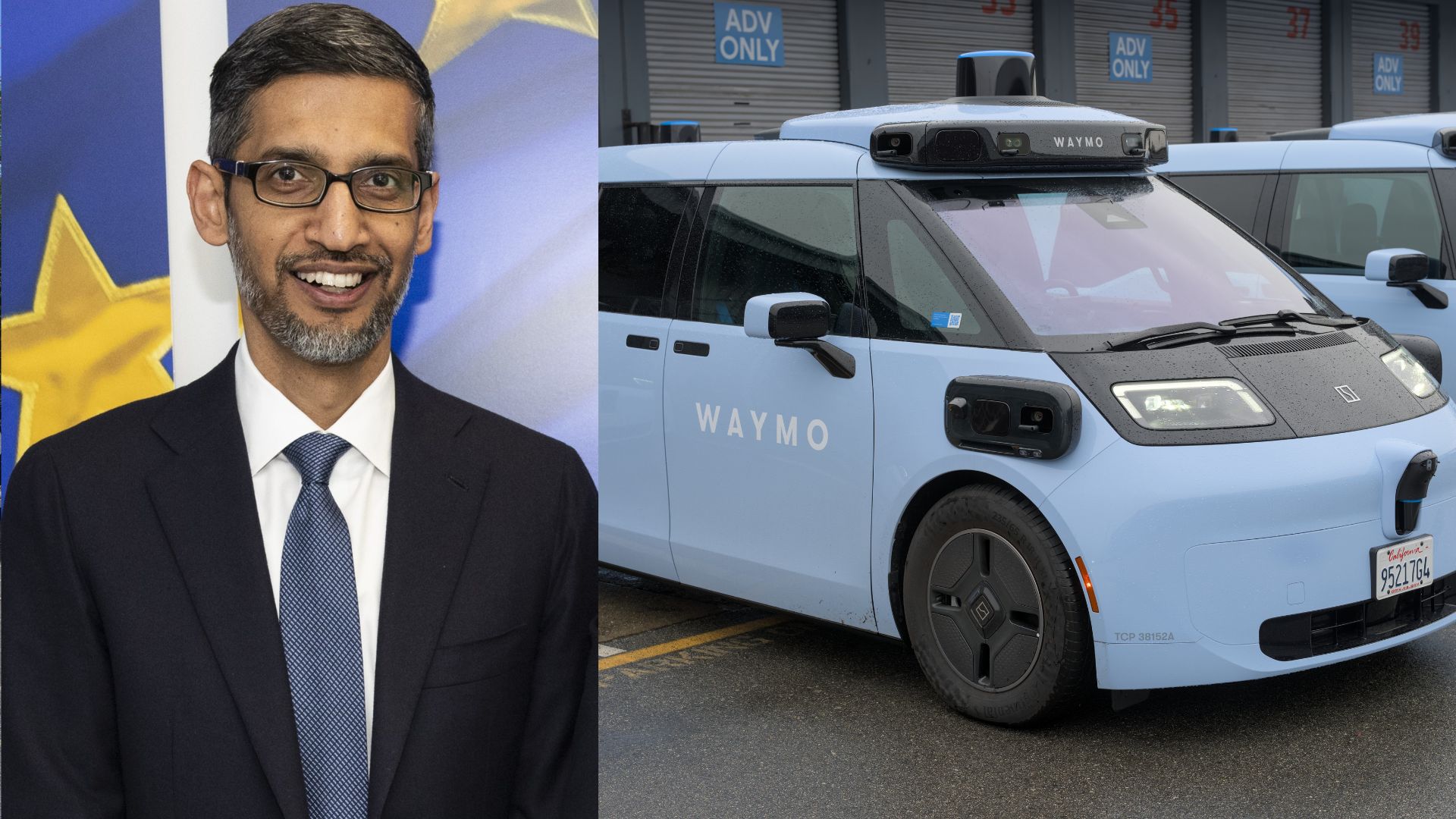
MOUNTAIN VIEW, Calif. (Diya TV) — Alphabet Inc. has approved a new compensation plan that could significantly boost the pay of CEO Sundar Pichai over the next three years. The package includes performance incentives tied to the growth of Waymo, the company’s self-driving car business. The plan shows how strongly the tech giant believes in its autonomous driving efforts. If Waymo’s value grows as expected, Pichai’s total compensation could reach about $692 million over the next three years. That would make it one of the largest pay packages of his career.
Alphabet’s board approved a $130 million grant tied to Waymo’s performance. These awards, called Bet Performance Units, depend on the increase in Waymo’s per-unit valuation over three years. The grant could reach as much as $260 million if Waymo’s value rises enough to trigger the maximum payout. The company’s compensation committee will determine the per-unit value growth during the performance period.
Despite the large incentives, Pichai’s base salary remains relatively modest for a major technology CEO. His annual salary stands at $2 million. However, stock-based incentives make up most of his potential earnings. When the company includes additional performance units and stock awards, the total value of the compensation package could reach nearly $692 million.
The new compensation plan does not focus on Waymo alone. Alphabet also included incentives tied to Wing, the company’s drone delivery project. The board granted Pichai $45 million in Bet Performance Units linked to Wing’s performance. Like the Waymo awards, these incentives depend on the project’s growth and success.
Both Waymo and Wing belong to Alphabet’s “Other Bets” division. This group includes experimental projects that operate outside the company’s core businesses. Alphabet built its global success through internet search, digital advertising, and products from Google. The Other Bets division explores new industries and emerging technologies that could shape the company’s future.
Waymo has recently expanded its autonomous taxi service across several cities. The service allows passengers to book rides in driverless vehicles through a mobile app. The company currently operates in about 10 cities. Executives plan to expand the service to roughly 20 more locations in the coming years. This expansion signals rising confidence in the technology and growing demand for autonomous transportation. The company aims to scale operations and increase commercial adoption.
Industry analysts see Waymo as a major player in the race to build reliable robotaxi networks. The technology uses advanced sensors, mapping systems, and artificial intelligence to operate vehicles without human drivers. As the service spreads, investors and analysts expect the business to play a bigger role in Alphabet’s long-term strategy.
Alphabet’s push into autonomous vehicles comes as competition in the sector grows rapidly. Electric car maker Tesla has also focused heavily on self-driving technology. Tesla CEO Elon Musk has repeatedly said robotaxis will drive the company’s next phase of growth. Several other tech companies and startups are also developing autonomous vehicle platforms.
The industry still faces technical and regulatory challenges. Companies must prove their systems can operate safely and reliably on public roads. Governments also continue to refine rules for driverless vehicles. Despite these hurdles, many technology leaders believe autonomous transportation will transform urban mobility.
Alphabet has long invested billions of dollars into experimental projects. Many of these ventures have generated losses while they developed new technologies. The decision to tie Pichai’s compensation directly to Waymo and Wing suggests the company sees real progress in these businesses.